Tallinn, Estonia
The first thing we noticed in Tallinn was the silence.
We had arrived from Berlin, taken Bus 2 from the airport and reached the Old Town in around 15 to 20 minutes. The bus ticket cost only €2, making the journey into the centre surprisingly simple.
As soon as we entered the Old Town, Berlin felt far away. The streets were paved with stone, medieval towers rose above the rooftops, and a cold March wind followed us through the narrow lanes.
Our Airbnb was inside the historic centre, with a view of Tallinn's old city wall. Looking out at the wall from our accommodation made the setting feel real in a way that photographs had not.
Tallinn had never been at the top of our travel list. My husband and I were searching for a destination for a March workation when we found an affordable Ryanair flight from Berlin Brandenburg Airport. Estonia felt close enough for an easy trip but unfamiliar enough to be interesting, so we booked it.
We stayed for five days. We used the weekend for sightseeing and explored during the mornings, evenings and lunch breaks on our working days.
This rhythm suited Tallinn particularly well. The Old Town is compact, restaurants and cafés are never far away, and the streets are at their quietest before the day visitors begin arriving.
Our three sightseeing days included medieval towers, viewpoints, traditional coffee houses, local markets, public squares and a visit to Kadriorg. The remaining time allowed us to experience Tallinn at a slower pace rather than treating it as a quick Baltic stopover.
This is the three-day Tallinn itinerary we followed, along with where we ate, what surprised us and what we would prioritise on a first visit.
Tallinn at a Glance
Location: Estonia, in Northern Europe and the Baltic region
Recommended time: Two full days for the Old Town, or three days when including Kadriorg
Airport connection: Bus 2 from Tallinn Airport to the city centre
Journey from the airport: Approximately 15 to 20 minutes
Airport bus ticket: €2 during our visit
Getting around: The Old Town is best explored on foot. We bought individual public-transport tickets when travelling farther away.
Card payments: We paid for almost everything by card.
Language: We found English widely spoken in cafés, restaurants and attractions.
March weather: Cold, occasionally windy, with rain and light snow
What to pack: A proper winter jacket, warm layers and comfortable shoes suitable for cobbled streets
Day 1: Tallinn Old Town, Toompea Viewpoints and Balti Jaama Market
After leaving our bags at the Airbnb, we went out to explore the Old Town.
Our accommodation was centrally located, so we did not need public transport for any of the first day's attractions. Most of the places were within walking distance of one another.
Breakfast at Café Maiasmokk
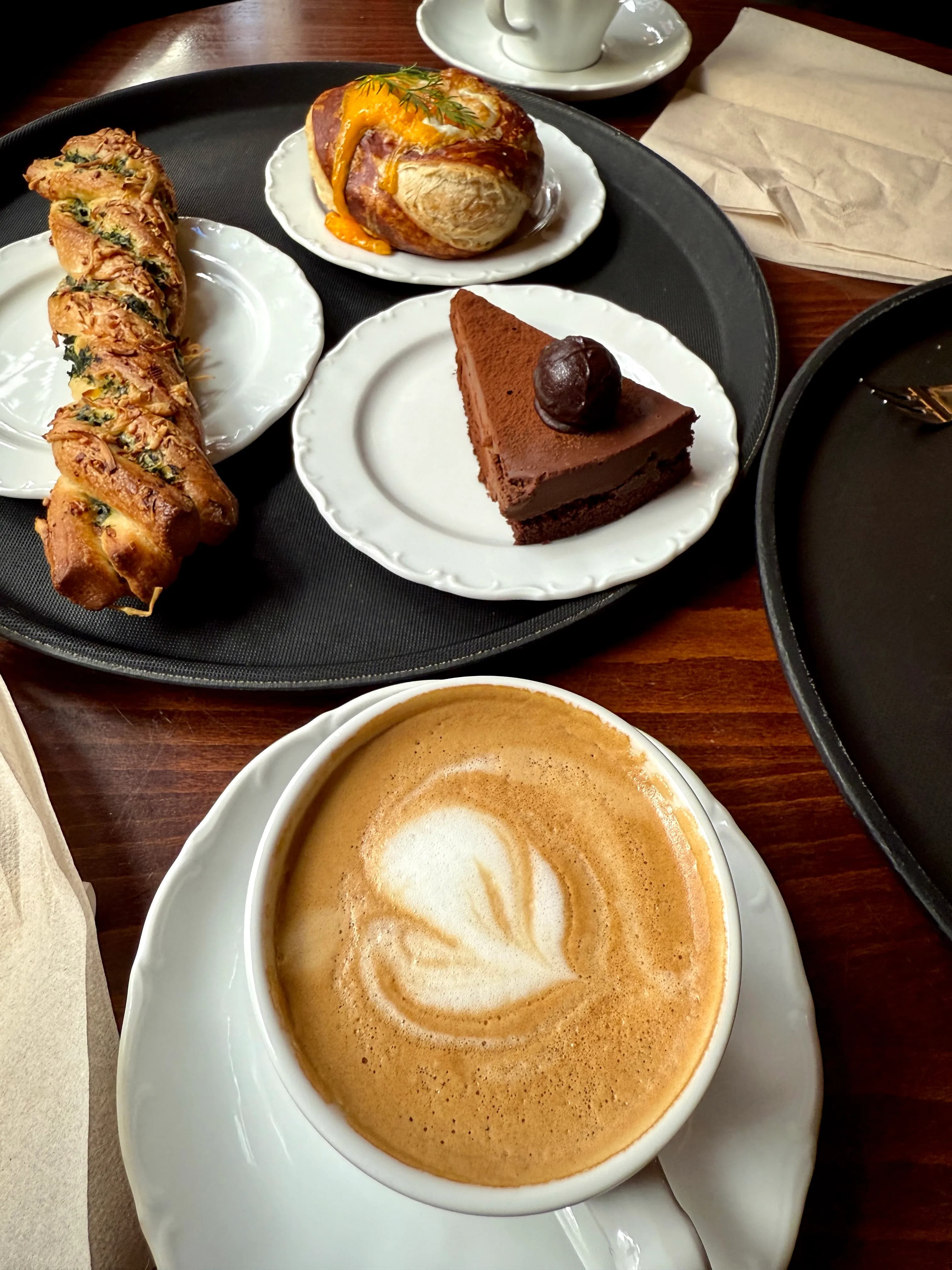
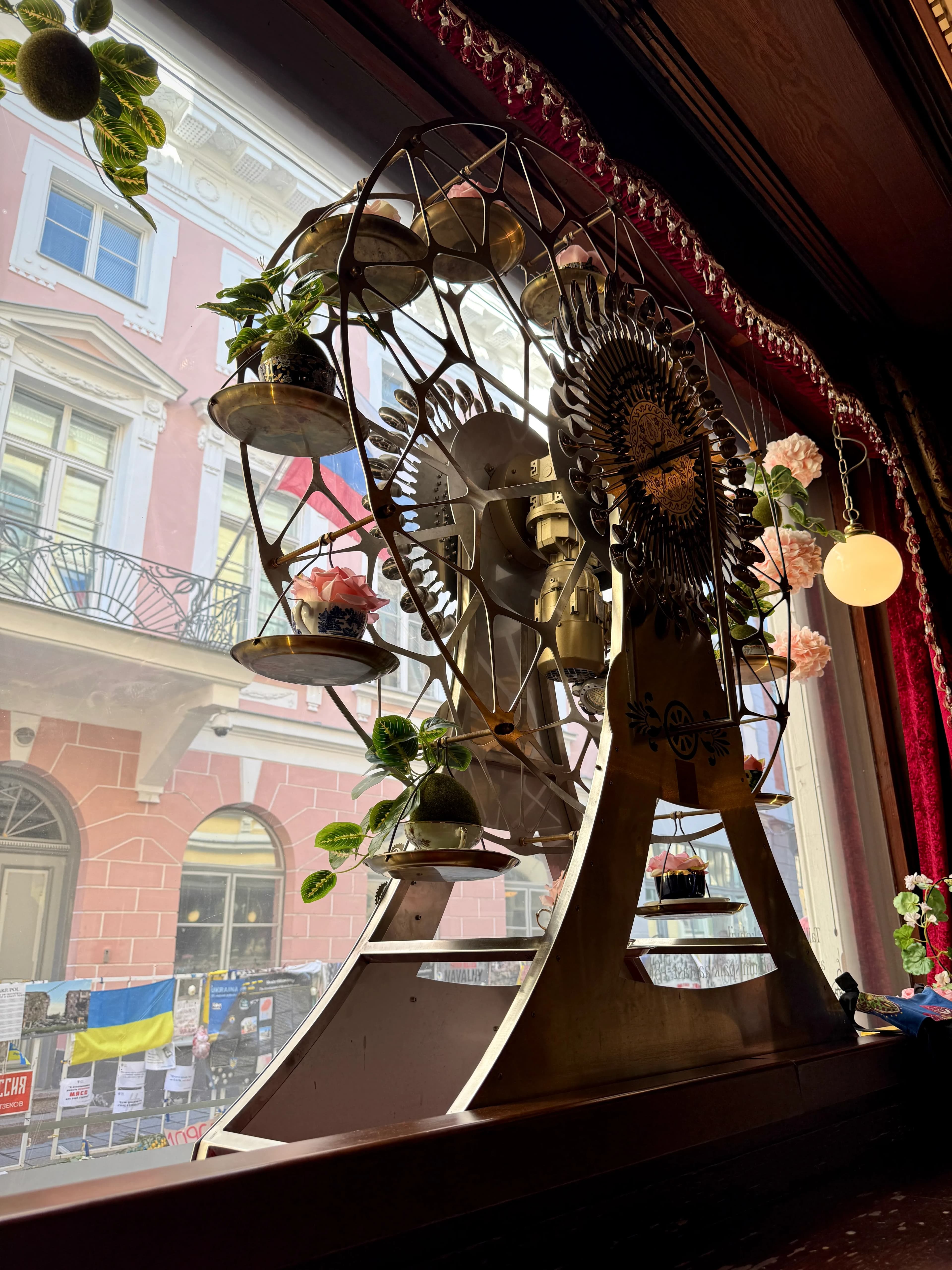
Our first stop was Café Maiasmokk, Tallinn's oldest operating café.
The café has been open since 1864 and still retains a traditional coffee-house atmosphere. Inside, we found chandeliers, dark wooden details, glass cabinets and displays of cakes and marzipan.
It was warm, elegant and noticeably different from the modern cafés we usually visit in Berlin.
We ordered a baked egg bread bowl, spinach pastries and hot coffee. After an early flight and the cold walk through the Old Town, it was exactly the sort of breakfast we needed.
Maiasmokk is close to Town Hall Square, so it works well as the beginning of an Old Town itinerary. Going in the morning also gave us a quieter experience before more visitors arrived.
Tallinn has several traditional coffee houses, and these became some of our favourite places during the trip. They did not feel interchangeable. Each had its own interior, atmosphere and character.
Town Hall Square

From the café, we walked to Town Hall Square, or Raekoja plats.
Tallinn Town Hall was completed in 1404 and is one of the city's most important medieval buildings. Its Gothic façade and tall spire dominate the square, while pastel-coloured merchant houses surround the remaining sides.
The square is often shown filled with café terraces or Christmas-market stalls. In March, it looked much more open.
There were no large crowds, and we could stand in the centre without constantly moving out of other people's photographs. That quietness helped us notice the shape of the buildings and the narrow streets leading away from the square.
Town Hall Square is not only a landmark. It is also a useful orientation point because many Old Town routes eventually pass through it.
Walking Up to Toompea Hill
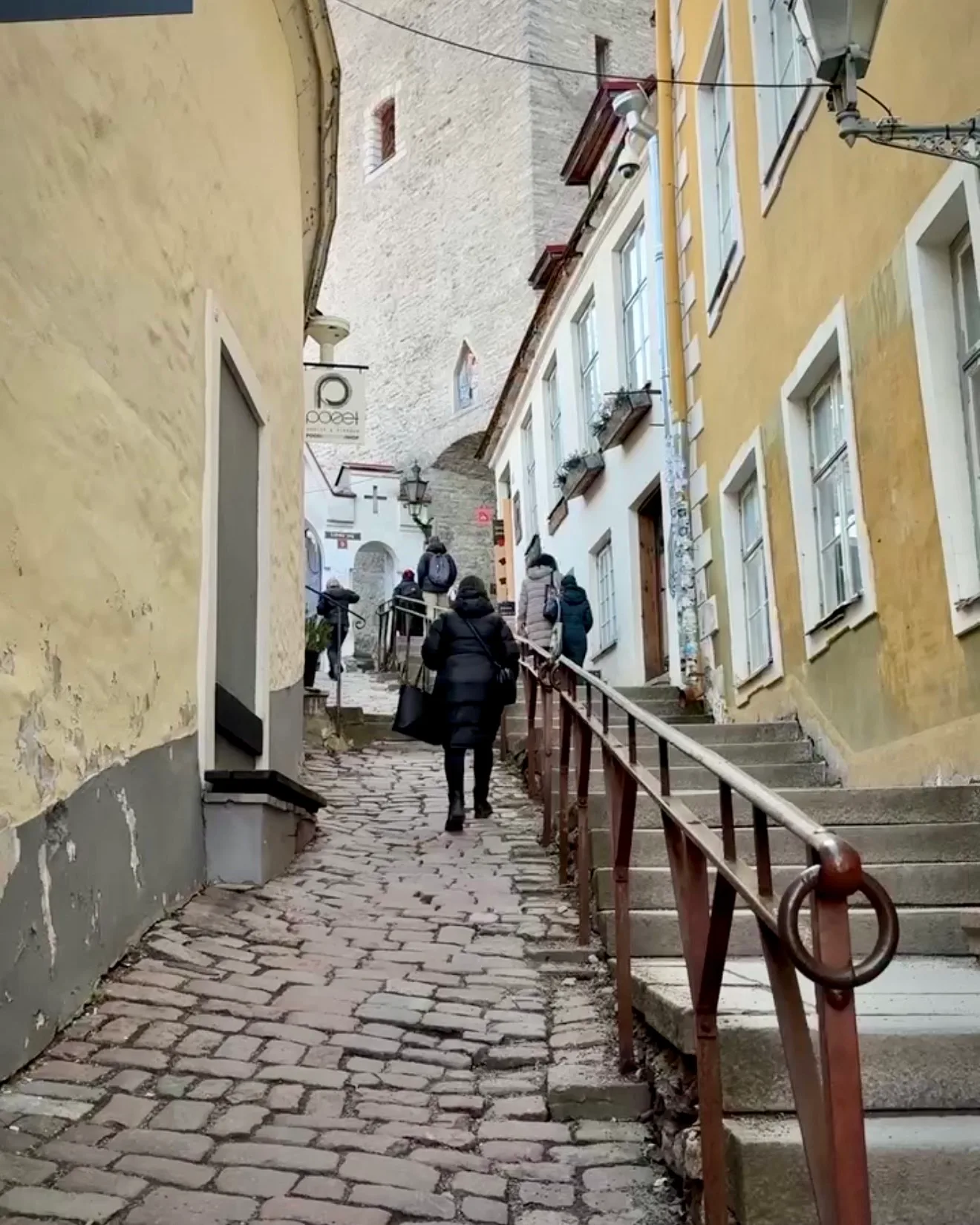
From the lower Old Town, we began walking uphill towards Toompea.
The route took us through stone lanes and past historic buildings, with occasional views back towards the lower town.
The climb was manageable, although the cobbled streets require some attention in cold or wet weather. We had rain and light snow during our stay, but the weather did not stop us from sightseeing.
Toompea felt calmer and more formal than the streets around Town Hall Square. This part of the city contains churches, government buildings, gardens and two of Tallinn's most popular viewing platforms.
Alexander Nevsky Cathedral

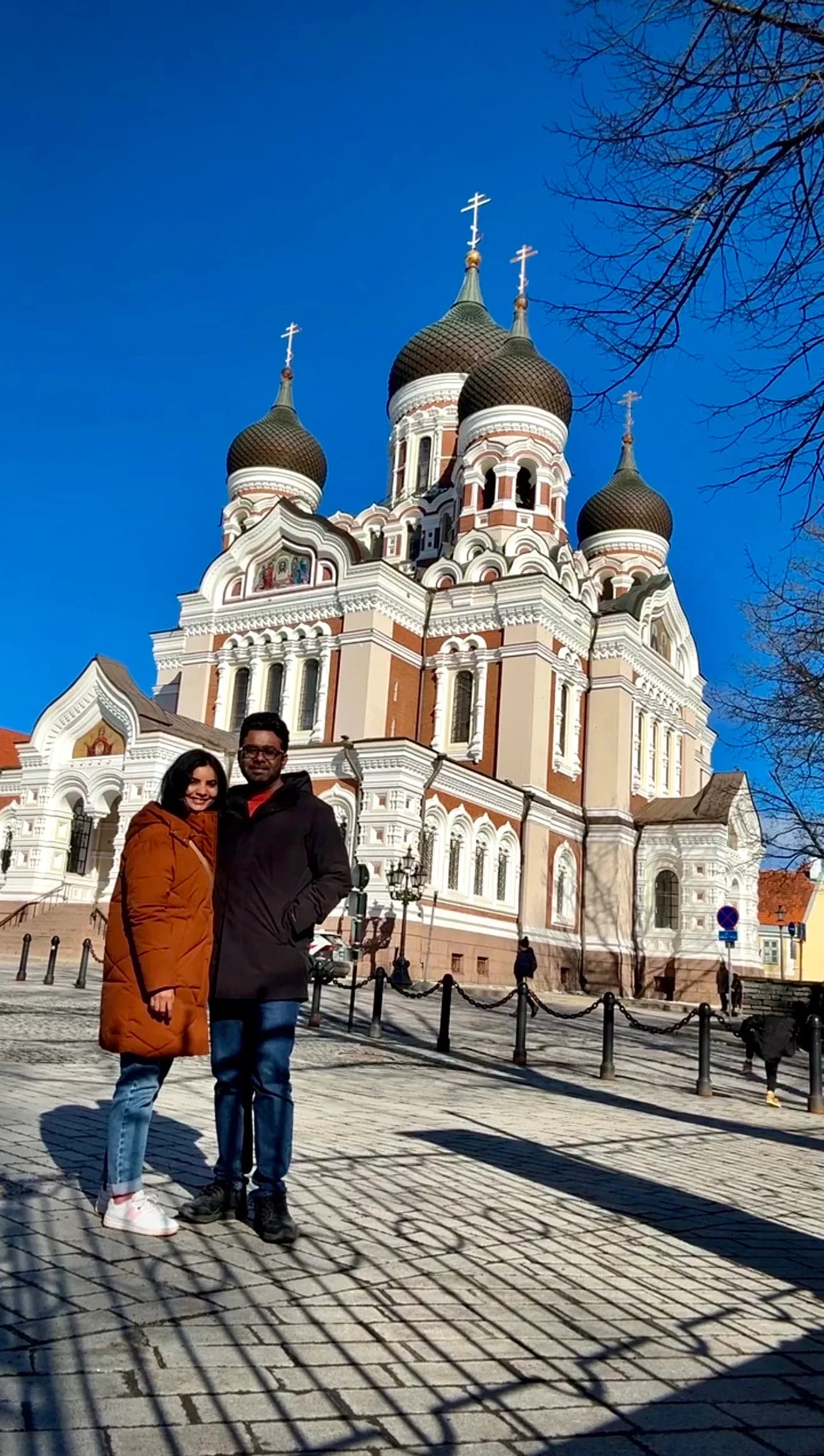
The Alexander Nevsky Cathedral was one of the most impressive buildings we saw in Tallinn.
Its dark onion domes, decorative mosaics and Russian Orthodox design immediately stand apart from the simpler medieval and Lutheran architecture nearby.
The cathedral was built while Estonia was part of the Russian Empire, and its position opposite Toompea Castle gives the surrounding area a strong historical contrast.
We found the exterior exceptional, but the interior was equally worth seeing. It was quieter and dimmer inside, with religious icons, ornate details and the smell of incense.
Entry was free during our visit.
The cathedral was also one of our favourite places for photographs. Its scale, domes and detailed façade gave us several possible angles rather than one obvious viewpoint.
Kohtuotsa Viewing Platform

From the cathedral, we walked to Kohtuotsa Viewing Platform.
This is where we saw the familiar view of Tallinn's red rooftops, church spires and modern city beyond the Old Town.
Seeing the city from above helped us understand its layout. Streets that had seemed separate while walking below appeared closely connected from the viewpoint.
Kohtuotsa is one of Tallinn's best-known photo locations, but it was not crowded during our March visit. We could take our time, look over the rooftops and photograph the view without waiting for a space.
Patkuli Viewing Platform

Patkuli Viewing Platform is only around five to ten minutes from Kohtuotsa, so we visited both.
The two viewpoints are close, but their views are not identical.
Kohtuotsa offers the recognisable panorama over the rooftops, while Patkuli gives a broader view of Tallinn's medieval walls, towers and the area around the railway station.
We would not recommend choosing only one unless your time is extremely limited. Visiting both creates an enjoyable walk through Toompea, and each provides a different photographic perspective.
Tallinn has so many good photo locations that we found it difficult to choose one favourite. Viru Gate, the city wall, Alexander Nevsky Cathedral and both viewing platforms were all memorable for different reasons.
Balti Jaama Turg
For lunch, we walked outside the Old Town to Balti Jaama Turg, the large market beside Tallinn's railway station.
The atmosphere changed almost immediately.
The Old Town is dominated by medieval architecture and visitors. Balti Jaama Market felt more connected to everyday Tallinn.
The market has several levels filled with fresh produce, bakeries, street-food counters, antiques, vintage clothing, household items and Estonian design shops.
At VLND Burger, we ordered fries with Parmesan and rosemary and had them with craft beer. It was an easy, informal lunch before we continued browsing the market.
Balti Jaama is worth visiting even on a short Tallinn trip. It is close to the Old Town but introduces a more contemporary side of the city.
Museum of Medieval Torture Instruments
After returning to the Old Town, we visited the Museum of Medieval Torture Instruments.
The museum displays replicas and explanations of punishments and torture devices associated with medieval Europe.
It is dark, graphic and not essential for every visitor. For us, it added another indoor stop to the itinerary and offered a disturbing look at the harsher side of medieval history.
This is the one attraction I would describe as optional rather than unmissable.
The Old Town, city walls, viewpoints and traditional cafés are central to the Tallinn experience. The torture museum depends much more on personal interest. Someone with limited time could skip it without feeling that they had missed an essential part of the city.
Cocktails at Sessel Speakeasy
We ended our first day at Sessel Speakeasy.
After walking since the morning, we wanted somewhere quiet where we could sit down and have a drink.
The bar had low lighting and a calm atmosphere. We ordered cocktails called Bloody Murdock and Crystal & Pink or Thorny Elixir.
The unusual cocktail names made the experience more memorable, and the relaxed setting was a comfortable end to our first day.
From there, we walked back to our Airbnb through the evening streets of the Old Town.
Day 2: Tallinn's City Walls, Viru Gate and Toompea Gardens
The following morning, the streets were still quiet and cold.
We put on our winter jackets and headed out to explore Tallinn's fortifications, gates and the gardens around Toompea Castle.
Breakfast at Carissimi Kohvik
We began at Carissimi Kohvik, a small café near Town Hall Square.
We ordered tiramisu dusted with cocoa, a layered cream cake with a hazelnut and chocolate flavour, a latte and a cappuccino.
It was a lighter breakfast than the one we had at Maiasmokk, but the cakes and coffee gave us enough time to warm up before visiting the city wall.
The café had a quieter, more minimal atmosphere than Tallinn's traditional coffee houses. That contrast made it a pleasant morning stop.
Munkadetagune Tower and Hellemann Tower
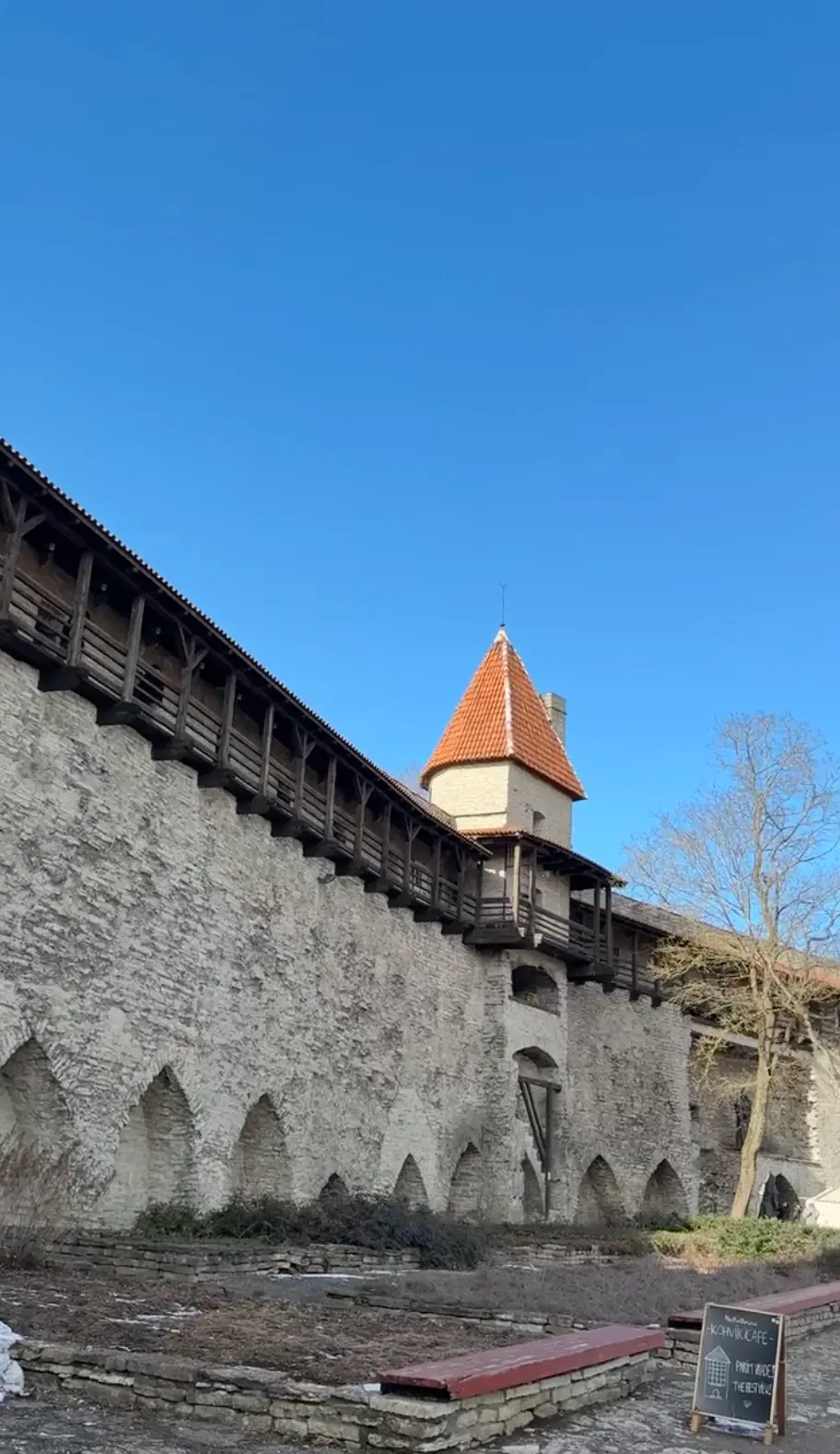
Tallinn was once protected by an extensive defensive wall and dozens of towers. Several sections remain, and some can be entered.
We paid €5 to access Munkadetagune Torn, also known as the Tower Behind the Monks.
The ticket allowed us to walk along a raised wooden section of the city wall towards Hellemann Tower.
The stairs were steep, and the walkway was narrow in places. From above, we could look down over rooftops and nearby lanes while imagining how the wall once functioned as part of Tallinn's defence.
This was one of the highlights of our trip.
Seeing the city wall from the street is impressive, but walking through the towers gave us a much better understanding of its height and structure.
The city wall was also one of our favourite photography locations. The stone, wooden walkways and rooftop views created a completely different setting from the open Toompea platforms.
Viru Gate

After leaving the wall, we walked towards Viru Gate.
The two ivy-covered towers are among Tallinn's most recognisable landmarks. They once formed part of the main defensive entrance into the city.
Today, the towers frame a busy street lined with shops and flower stalls.
We liked the contrast between the medieval gateway and the everyday activity around it. People were walking into the Old Town, buying flowers and moving between cafés while the towers remained above the street.
Viru Gate became one of our favourite photo spots because it captured both sides of Tallinn at once: the preserved medieval city and the modern life continuing around it.
Freedom Square

From Viru Gate, we continued towards Freedom Square.
The square feels much more open and modern than the enclosed streets of the Old Town. At one side stands the War of Independence Victory Column, a glass monument dedicated to those who fought for Estonia's independence between 1918 and 1920.
We did not spend a long time here, but the square provided an interesting transition between the lower Old Town and Toompea.
After hours among medieval buildings, its open layout and modern monument made the historical changes in Tallinn more visible.
Danish King's Garden
From Freedom Square, we walked uphill to the Danish King's Garden.
According to legend, the Danish flag fell from the sky during a 13th-century battle in Tallinn, helping the forces of King Valdemar II.
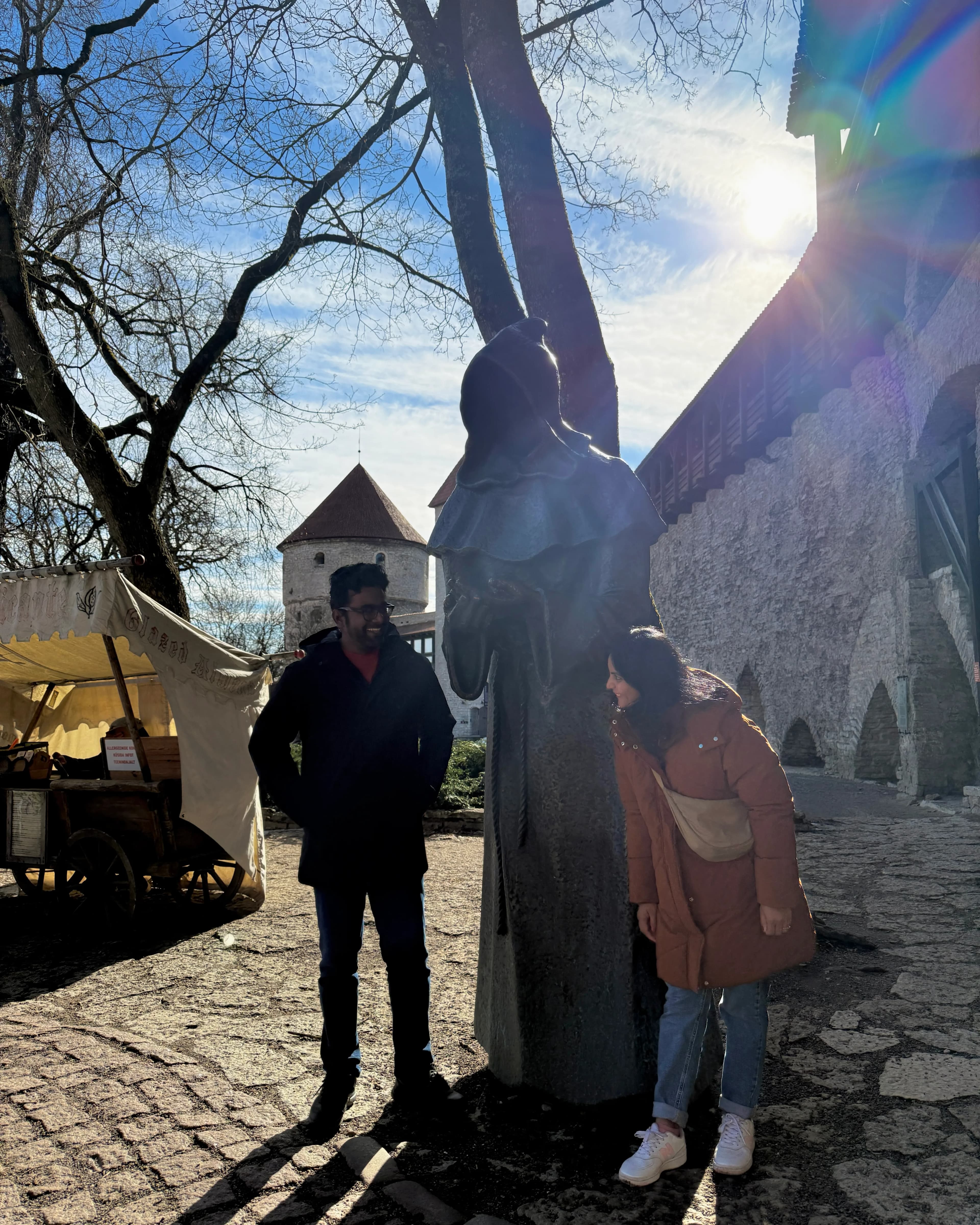
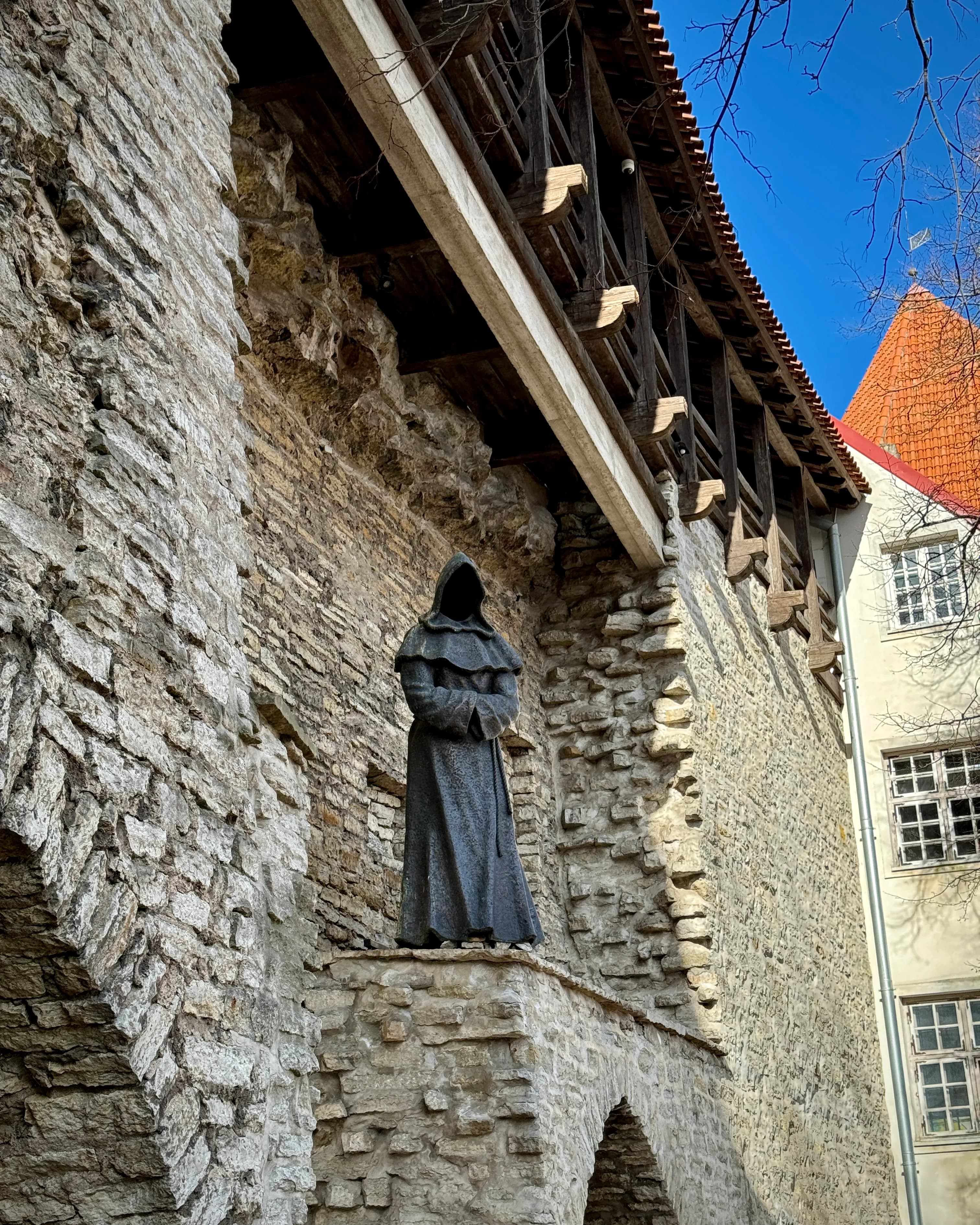
The garden is small, but its three large monk sculptures make it memorable.
Their dark robes, covered faces and positions against the stone walls gave the courtyard an eerie atmosphere, particularly in the cold grey weather.
We stopped to take photographs before continuing towards Toompea Castle.
The garden does not require much time, but it is easy to include while visiting the nearby cathedral, castle and viewpoints.
Governor's Garden and Toompea Castle

Beside the Danish King's Garden is Governor's Garden, a formal park in front of Toompea Castle.
The castle's pink Baroque façade looks very different from the older stone walls nearby. Today, the building houses the Estonian Parliament.
It also stands directly opposite the Alexander Nevsky Cathedral, placing two contrasting parts of Estonia's political and architectural history within the same space.
We walked through the garden and photographed the castle from outside.
Because the building is still used by Parliament, it does not feel like an ordinary palace attraction. Even without entering, it is worth seeing as part of a wider walk through Toompea.
Food and Drinks at Viru Lokaal
After a long day outside, we returned towards Viru Street and stopped at Viru Lokaal.
We ordered chicken wings, wine and beer.
It was an affordable and uncomplicated place to rest after walking through the Old Town. The central location also meant we did not need to travel anywhere else before returning to our accommodation.
It was not the most distinctive restaurant of the trip, but it worked well for what we needed at that moment.
Day 3: St Catherine's Passage and Kadriorg
For our final full sightseeing day, we kept the schedule lighter.
We had already visited most of the major Old Town landmarks, so we spent the morning exploring smaller streets before travelling outside the centre in the afternoon.
Hot Chocolate at Kofeman
We began at Kofeman and found a seat beside the window.
We ordered hot chocolate topped with whipped cream.
It was a simple start to the morning, but sitting beside the window with a warm drink while the Old Town slowly became busier was one of those small moments that suited the trip.
During our workation days, we discovered that mornings were the best time to walk through Tallinn. The streets were quiet before day visitors arrived, and we could experience the Old Town without feeling rushed.
St Catherine's Passage
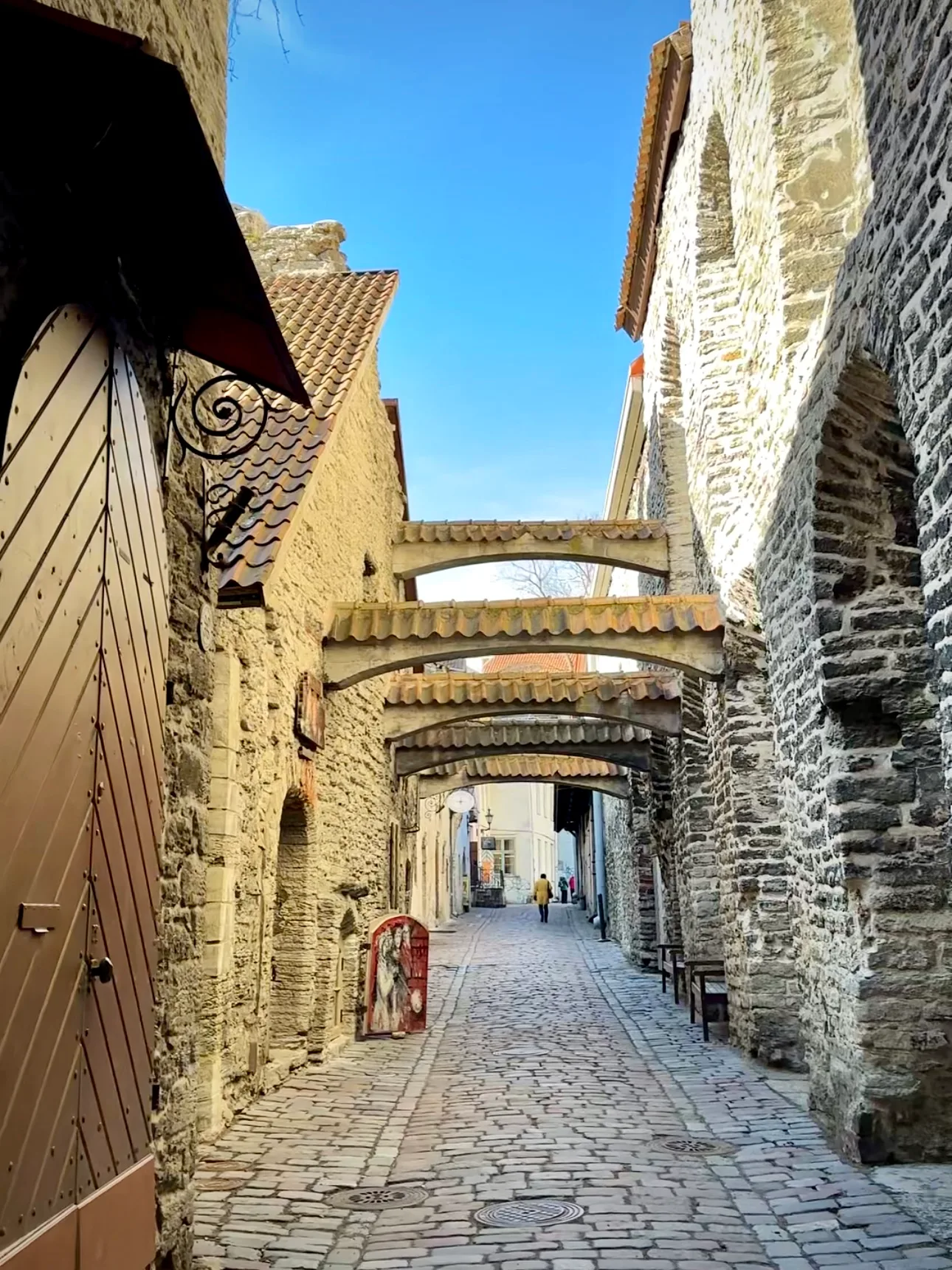
From Kofeman, we walked to St Catherine's Passage, known locally as Katariina käik.
The narrow lane is lined with stone walls, old arches, wooden doors and artisan workshops. Craftspeople in the area work with ceramics, glass, textiles and other traditional materials.
What made the passage interesting was that it did not feel preserved only as a photography location. The workshops gave it an active purpose.
The passage itself is short, but we took our time looking at the doors, signs and details in the stonework.
It was quieter than Town Hall Square and Viru Street, which made it easier to appreciate the setting.
Around twenty to thirty minutes is enough for the passage unless you plan to visit the individual workshops or shop for handmade items.
Lunch at Hell Hunt Pub
For lunch, we went to Hell Hunt Pub.
We ordered Buffalo chicken wings, beer and Maitsev tomatisupp juustuga, a tomato soup served with cheese.
The soup was particularly welcome after being outside in the cold. It was warm, comforting and more filling than we expected.
Hell Hunt had an informal pub atmosphere and worked well for a proper lunch before travelling to Kadriorg.
Kadriorg Park

In the afternoon, we left the Old Town and travelled to Kadriorg.
After spending so much time among narrow lanes and closely packed buildings, the wide paths and open grounds of Kadriorg Park felt completely different.
Because we visited in March, the trees were bare and the formal gardens were not in bloom. The park did not have the colour it would have in late spring or summer.
However, it was peaceful, spacious and almost empty.
We did not feel that the lack of flowers made the visit unnecessary. The winter landscape allowed the palace to stand out more clearly, and the quiet paths gave us another side of Tallinn to explore.
Kadriorg Palace
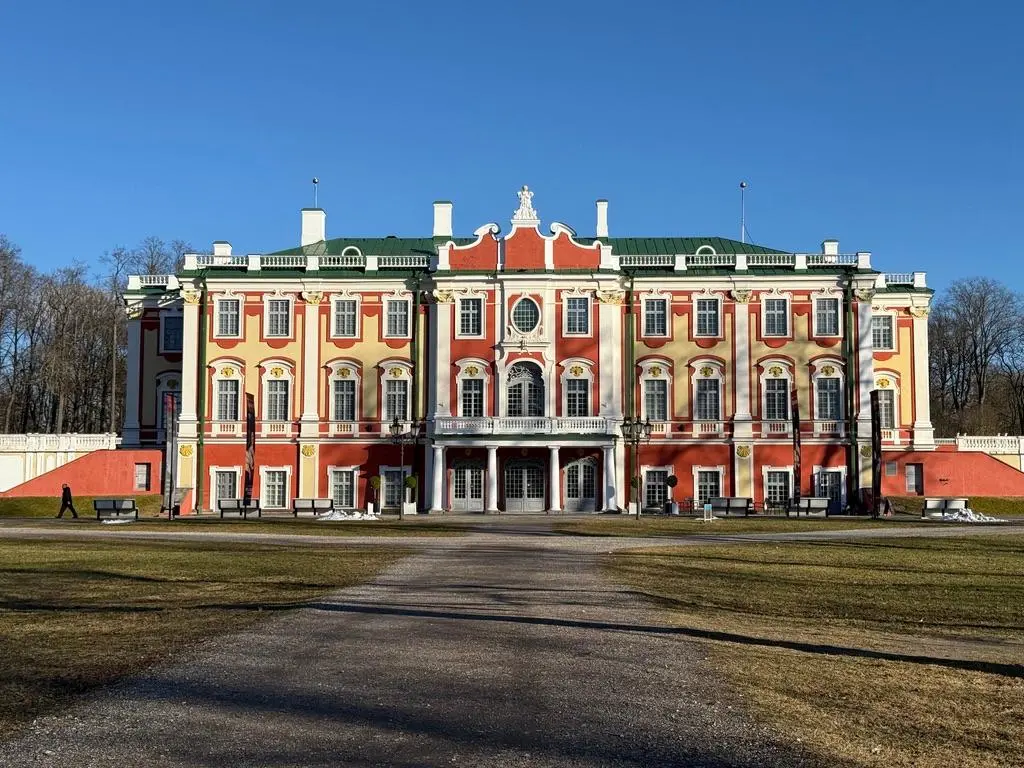
Kadriorg Palace was built in the early 18th century for Catherine, the wife of Russian Tsar Peter the Great.
Its red-and-white Baroque façade stood out immediately against the muted colours of the March park.
We did not enter the palace. We explored the grounds and viewed the building from outside.
Even without visiting the museum inside, the journey to Kadriorg was worthwhile. The palace, formal layout and large surrounding park provided a strong contrast to the medieval Old Town.
For a one-day Tallinn itinerary, we would prioritise the Old Town. With three days, Kadriorg is worth adding because it broadens the experience beyond towers and cobbled lanes.
Kehrwieder Saiakang
After returning to the Old Town, we stopped at Kehrwieder Saiakang.
The café was tiny and quiet, with old furniture and traditional décor. It felt less polished than a modern coffee shop, but that was part of what we liked about it.
We ordered Kehrwieder's Famous Hot Chocolate, or Kuum šokolaad, and a handmade chocolate cake called Šokolaadikook.
The hot chocolate was rich, and the old-fashioned interior made the break feel particularly suited to Tallinn.
This was one of the traditional coffee-house experiences that stayed with us after the trip. The cafés were not merely places to stop between attractions. Their interiors and atmosphere became part of how we remember the Old Town.
Dinner at Beer House
For our final dinner in Tallinn, we went to Beer House on Dunkri Street.
The restaurant has a large wooden interior and brews its own German-style beers on site.
It was almost empty when we visited, but we liked the interior and had plenty of space to look around.
We ordered Küüslauguleivad, Estonian-style garlic bread, fried battered chicken wings and beer.
The garlic bread was heavier than we expected. It was filling enough to feel closer to a substantial snack than a light side dish.
We stayed for a while before walking back through the Old Town.
The streets were quieter by then, and the evening lighting highlighted the stone buildings and narrow lanes without changing the character of the city.
What Surprised Us Most About Tallinn
The biggest surprise was not one attraction.
It was how well Tallinn worked as a workation destination.
The Old Town is small enough that we could work during the day and still experience the city without needing a complicated schedule.
We could walk through quiet streets in the morning, return to our Airbnb to work, go out for lunch and explore again in the evening.
There were plenty of cafés and restaurants within walking distance, and the reliable internet at our Airbnb allowed both of us to work comfortably.
Tallinn also felt calm during the weekdays. We did not need to wait for the weekend to enjoy the city.
The ease of combining work with short walks became one of the most useful discoveries from our trip.
What We Wish We Had Known Before Visiting
We wish we had understood just how valuable the early mornings would be.
Tallinn's Old Town becomes livelier as day visitors arrive. Because we were staying inside the historic centre, we could walk around before that happened.
The streets felt more personal at that hour. We could hear our footsteps on the stone, take photographs without waiting and notice architectural details that were easier to miss later.
For anyone staying inside or close to the Old Town, we recommend going out before breakfast at least once.
We were also surprised by how close Tallinn Airport was to the centre. The simple 15 to 20-minute bus journey meant that arrival day still felt like a proper sightseeing day.
Is March a Good Time to Visit Tallinn?
March worked well for us because we were comfortable travelling in cold weather.
The weather was chilly, and we experienced rain, light snow and occasional strong wind. We wore winter jackets, but the cold did not prevent us from exploring.
The main disadvantage was that Kadriorg's gardens were not yet in bloom. Outdoor terraces were also limited compared with the warmer months.
The advantage was the lack of crowds.
The viewing platforms were quiet, the medieval passages were easy to explore, and we could photograph the Old Town without constantly waiting for other people to move.
March will not suit travellers looking for warm weather and green parks. It is a good option for those who value atmosphere, quieter streets and traditional cafés more than outdoor dining.
How Many Days Do You Need in Tallinn?
We recommend at least two full sightseeing days in Tallinn.
Two days allow enough time for Town Hall Square, Toompea Hill, the viewpoints, Alexander Nevsky Cathedral, Viru Gate, the city wall and Balti Jaama Market.
A third day gives you time for smaller Old Town lanes and Kadriorg without making the itinerary feel rushed.
Our three sightseeing days felt balanced. We covered the major landmarks but still had time to sit in cafés, have proper lunches and walk without constantly checking the time.
Staying for five days worked especially well because we were combining travel with work.
Taking the Ferry From Tallinn to Helsinki
After Tallinn, we continued our workation in Helsinki.
We travelled with Viking Line and booked the ferry around two to three days before departure.
The journey took approximately two and a half hours.
On the morning of departure, we left our Airbnb early and travelled directly to the ferry terminal with our backpacks. We were backpacking, so managing our luggage was simple.
The ferry process was easy, and travelling by sea felt like a natural continuation of the Baltic trip.
Booking a few days ahead worked for us, although travellers visiting during a busy season may prefer to reserve earlier.
Final Thoughts
Tallinn gave us more than we expected from a city we had booked almost spontaneously.
We remember the cold wind, the quiet stone lanes and the view of the old city wall from our Airbnb. We remember walking through the towers, looking across the rooftops from Toompea and warming up in cafés with traditional interiors.
The Old Town was our favourite part of Tallinn, but it was not one single monument that made it memorable.
It was being able to experience the same streets at different times of day.
In the morning, they were silent. Around lunchtime, the squares and restaurants became livelier. In the evening, the crowds thinned again and the lighting changed the appearance of the stone buildings.
Kadriorg, Balti Jaama Market and the cafés also helped the trip feel more complete. They showed us that Tallinn had more to offer than a collection of medieval photo spots.
For a first visit, we recommend giving the city at least two or three days. For a workation, staying longer makes even more sense.
Tallinn is compact enough to explore around a working schedule, but varied enough that our walks never felt repetitive.
From there, we boarded a Viking Line ferry and travelled across the Baltic Sea to Helsinki for the next part of our trip. Read about that in our Helsinki guide.