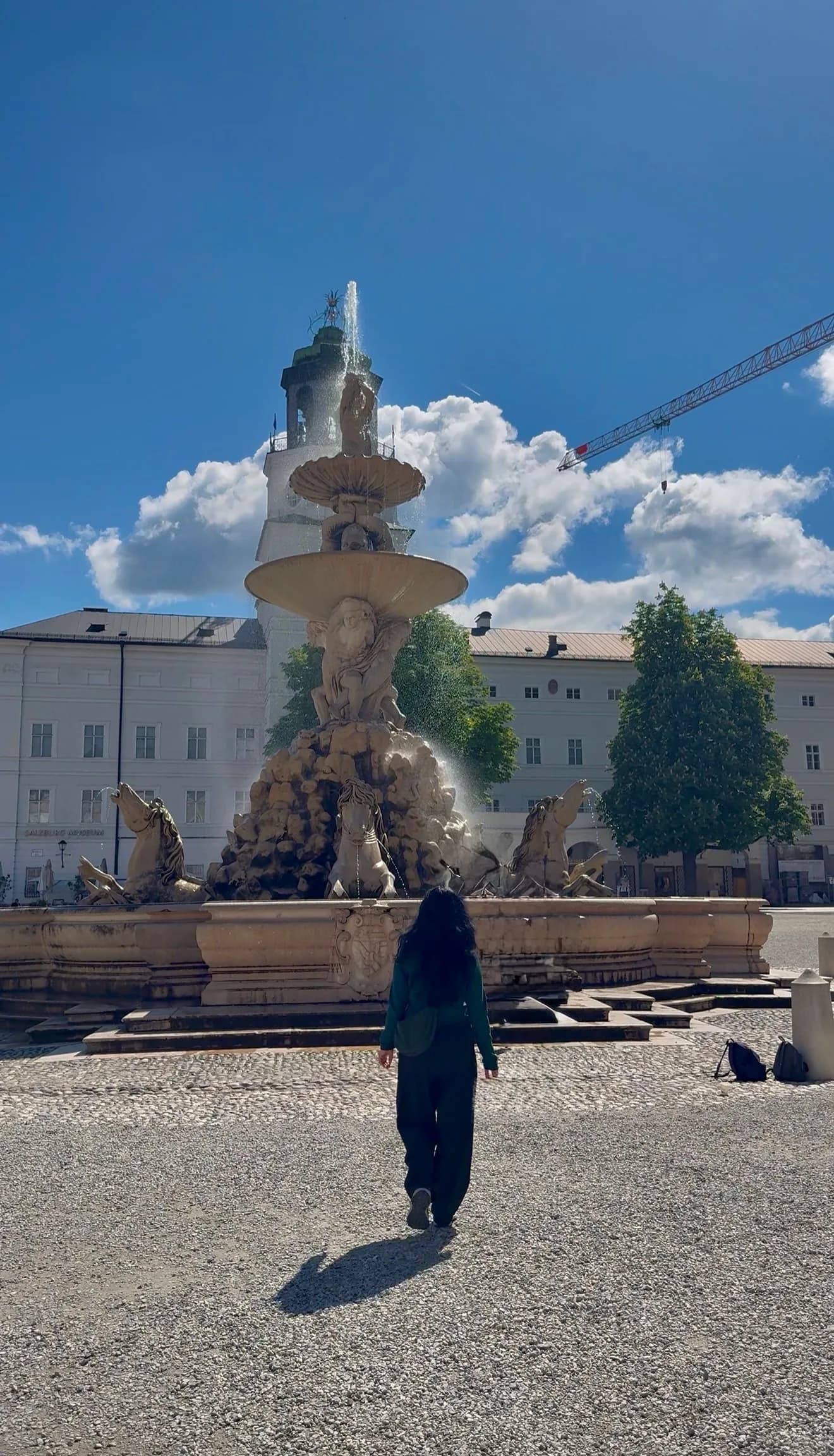
Salzburg, Austria
Salzburg was our day trip from Munich, and it became one of the most memorable parts of our five-day trip.
We wanted to do something spontaneous from Munich, and the idea of stepping into Austria for a day felt exciting. Salzburg made sense because it was easy to reach by train, walkable once we arrived, and full of places we could explore without needing a complicated plan.
We took an early morning regional train from Munich and reached Salzburg around 8 am. That early start helped a lot. Salzburg is beautiful, but it is also very popular. The old town is compact, which is great for walking, but it also means the main streets and squares can get crowded quickly.
The best part of our day was the mix. We had a calm morning at Mirabell Gardens, coffee and Sacher Torte at Café Sacher, a surprisingly interesting visit to Mozart's Geburtshaus, busy old town streets, grand spaces like Residenzplatz and DomQuartier, a modern sculpture at Kapitelplatz, and finally the views from Hohensalzburg Fortress.
This post is for anyone planning a Salzburg day trip from Munich by train. I will share our route, what felt worth it, what became crowded, and what I would do differently next time. We did this as part of our five-day Munich trip.
A Quick Note on the Train from Munich to Salzburg
Getting from Munich to Salzburg by train was simple.
We used our Deutschlandticket and took a regional train. If you are also using the Deutschlandticket, check the train carefully before boarding. It is valid on regional trains, but not on high-speed trains like ICE, Railjet, or Westbahn.
The easiest way to avoid confusion is to use the “local transport only” filter in the Deutsche Bahn app. That way, you only see the regional options that work with the ticket.
The journey took around two hours. Since we started early, the train did not feel too difficult, and reaching Salzburg in the morning gave us enough time for a full day.
Tip: Keep your passport or ID with you. On our return journey, there was border police control on the train.
Quick Trip Overview
Route: Munich to Salzburg by regional train
Transport: Deutschlandticket
Arrival time: Around 8 am
Trip style: Full day trip, returned to Munich in the evening
Main places we visited: Mirabell Gardens, Café Sacher, Marko-Feingold-Steg, Mozart's Geburtshaus, Getreidegasse, Residenzplatz, DomQuartier, Kapitelplatz, Hohensalzburg Fortress, Mozartplatz, Mozart's Residence, St. Peter's Abbey area, and Gurken
Best for: First-time visitors, couples, history lovers, old town walks, café stops, and train travellers
Walking level: Moderate to high
Worth it? Yes, but start early and wear comfortable shoes.
Starting the Morning at Mirabell Gardens
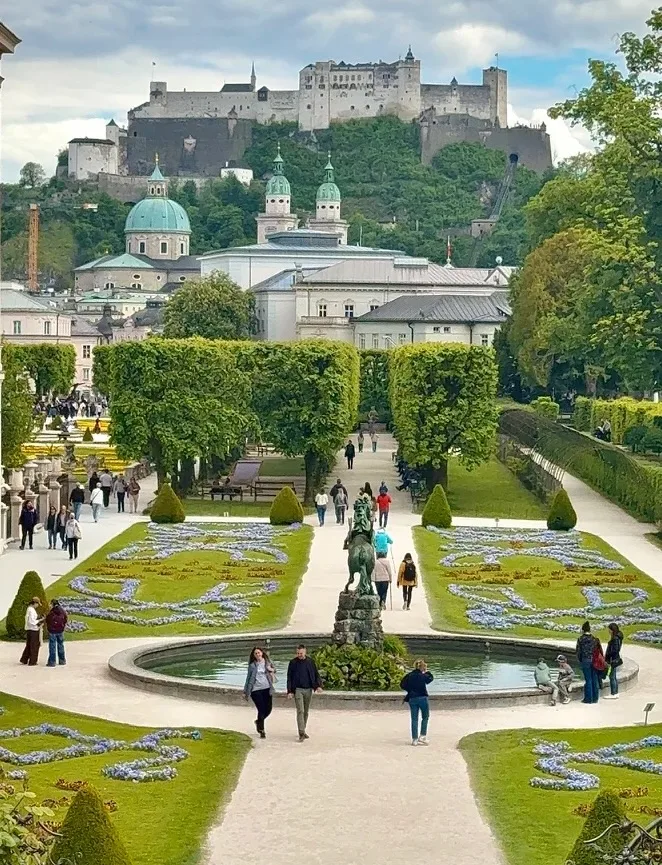
Our first stop in Salzburg was Mirabell Gardens.
This was a good place to begin after the train journey because it did not require tickets, waiting time, or any serious planning. We could simply walk in, slow down, and get our first proper view of the city.
Mirabell Gardens are known for their formal garden layout, flower beds, statues, and the classic view towards Hohensalzburg Fortress. From here, you can see how Salzburg is shaped: gardens in front, the old town across the river, and the fortress sitting high above the city.
What made our morning feel different was the marathon happening that day. On the train from Munich, we had noticed many people dressed for running, but we did not know why. Once we reached Salzburg, we realised that a local marathon was taking place. Around Mirabell Gardens, runners were warming up, meeting their groups, and slowly filling the area with energy.
It was not something we had planned around, but it gave our first impression of Salzburg a lively and local feeling. Mirabell also helped us understand how walkable the city would be. The river was close, Café Sacher was nearby, and the old town was just across the bridge.
Budget 30 to 45 minutes for your visit. Starting here early is the best approach; the gardens feel much calmer in the morning, and the sweeping view towards the fortress is a wonderful beginning to the day.
Coffee and Sacher Torte at Café Sacher
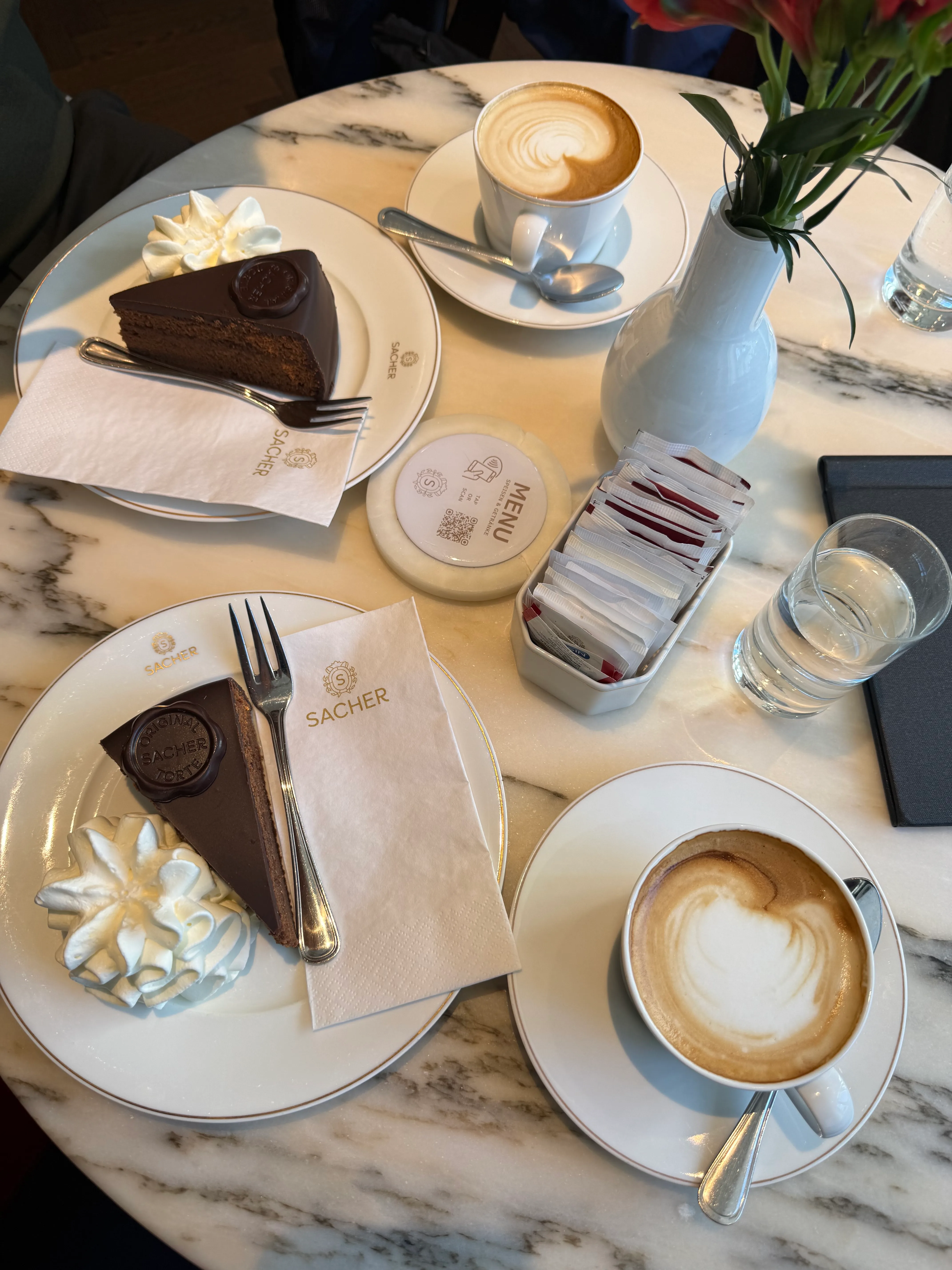
After Mirabell Gardens, we walked towards Café Sacher.
We wanted to try the famous Sacher Torte while we were in Austria. Since Café Sacher is close to the river and not far from Mirabell Gardens, it fit naturally into our route before entering the old town.
Going early was the right decision. When we reached, the café was almost empty, so we could sit peacefully and enjoy our coffee and cake without feeling rushed. Later in the day, famous cafés can get much busier, so I was glad we did this in the morning.
The Sacher Torte was something we wanted to try once because it is such a well-known part of Austrian café culture. I would not say Café Sacher is a must for everyone. If you do not care much about cafés or desserts, you can skip it. But for us, it added a slower and more memorable start to the day. It also gave us a nice pause before entering the busier old town.
Expect to spend 45 minutes to an hour here. If you can, go in the morning. It feels much better as a calm breakfast stop than fighting for a table during a crowded afternoon break.
Crossing Marko-Feingold-Steg into the Old Town
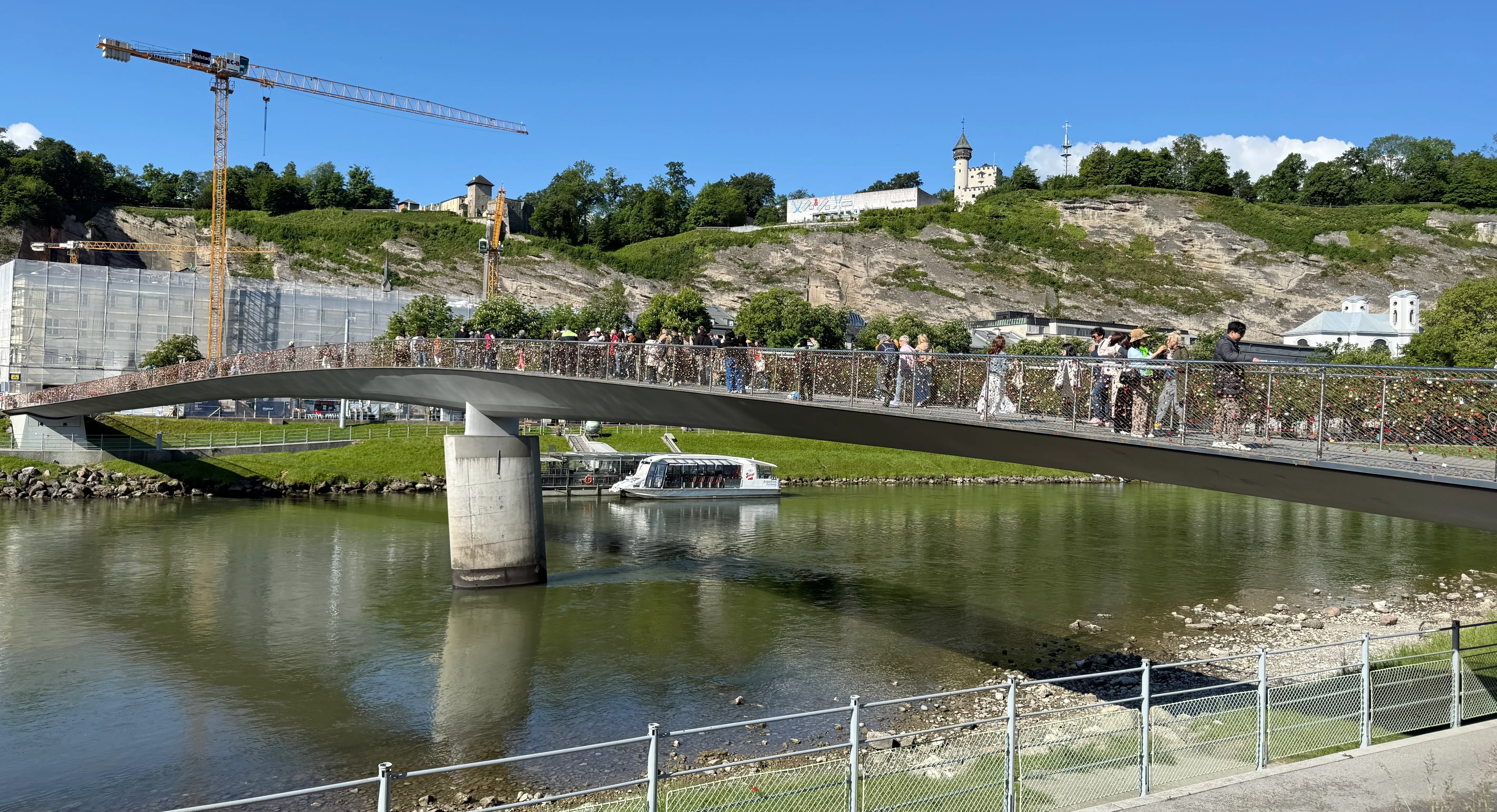
After Café Sacher, we crossed Marko-Feingold-Steg to enter Salzburg's old town.
This pedestrian bridge is also known by its former name, Makartsteg. It crosses the Salzach River and is covered with love locks. From the bridge, you get an easy view of the river, the old town, and the fortress above the city.
I liked this part because it felt like a natural transition. On one side, we had Mirabell Gardens and Café Sacher. On the other side, Salzburg's old town was waiting.
This is also when the city started to feel very easy to explore. You do not need buses or trams for the main old town sights. Once you cross the river, the main places slowly appear one after another.
It only takes about 10 to 15 minutes to cross, but make sure to pause on the bridge for a few minutes before crossing fully. It naturally connects Mirabell and Café Sacher with the old town while providing one of the easiest and most picturesque views of Salzburg.
Getreidegasse: The Street We Should Have Explored Earlier
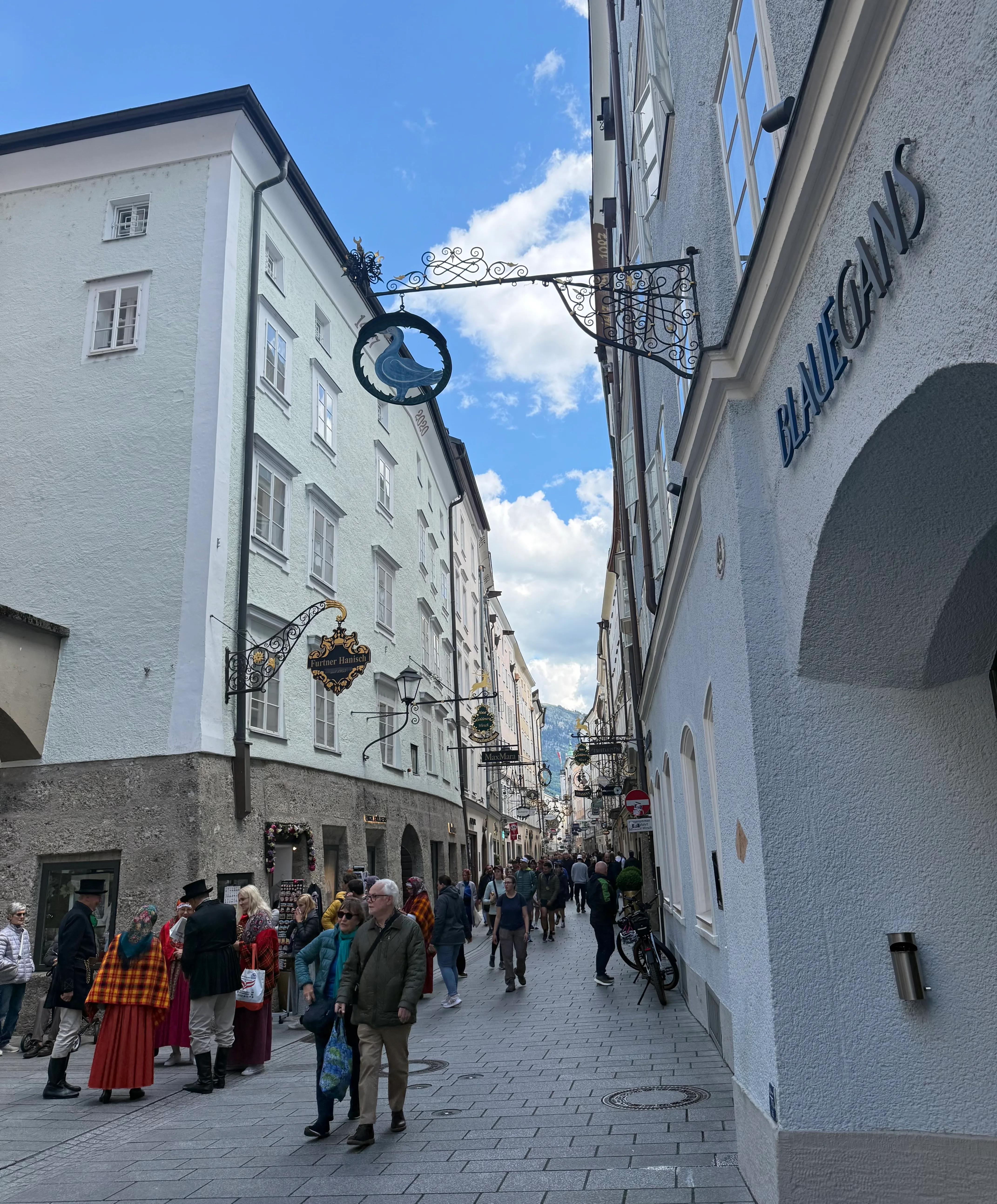
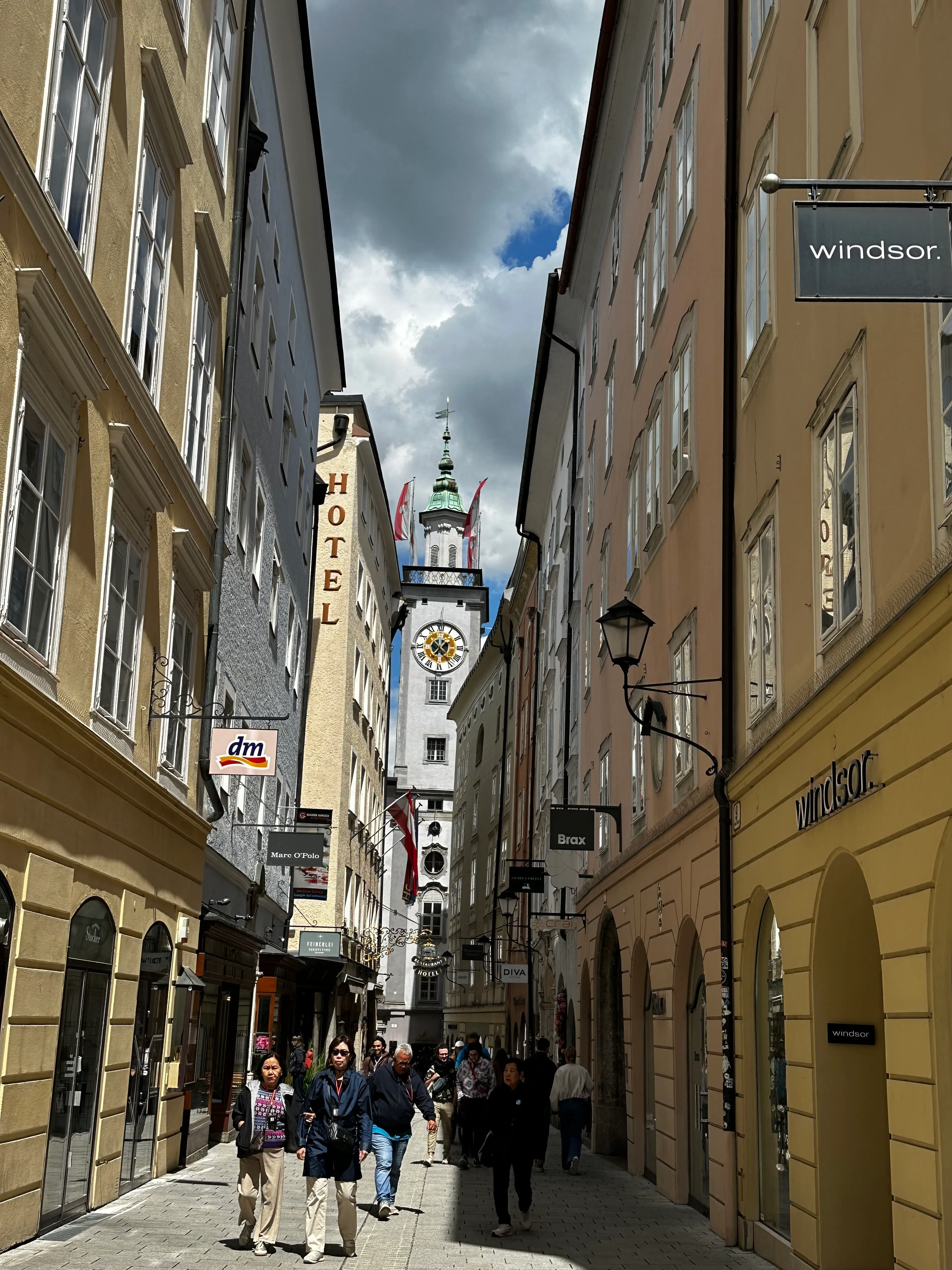
Getreidegasse is one of the most famous streets in Salzburg's old town.
It is known for Mozart's birthplace, decorative wrought-iron shop signs, old passageways, courtyards, and shopping. It is also one of the busiest places in the city.
This is where we made one small mistake in our route.
We entered the old town in the morning, but instead of spending proper time on Getreidegasse right away, we moved ahead towards other squares and sights. Later, when we came back, the street was much more crowded. At that point, it was harder to stop, look up, take photos, or enjoy the details.
That is why I would suggest exploring Getreidegasse earlier in the day if you can. It is easy to treat it only as a shopping street, but it has more character when you walk slowly. The old signs, narrow lanes, small passages, and courtyards make it more interesting than it first appears.
Budget about 30 to 45 minutes to walk through before the main day crowds arrive. It is much easier to enjoy the old signs and small passages when you actually have the physical space to look around.
Mozart's Geburtshaus: A Museum That Surprised Me
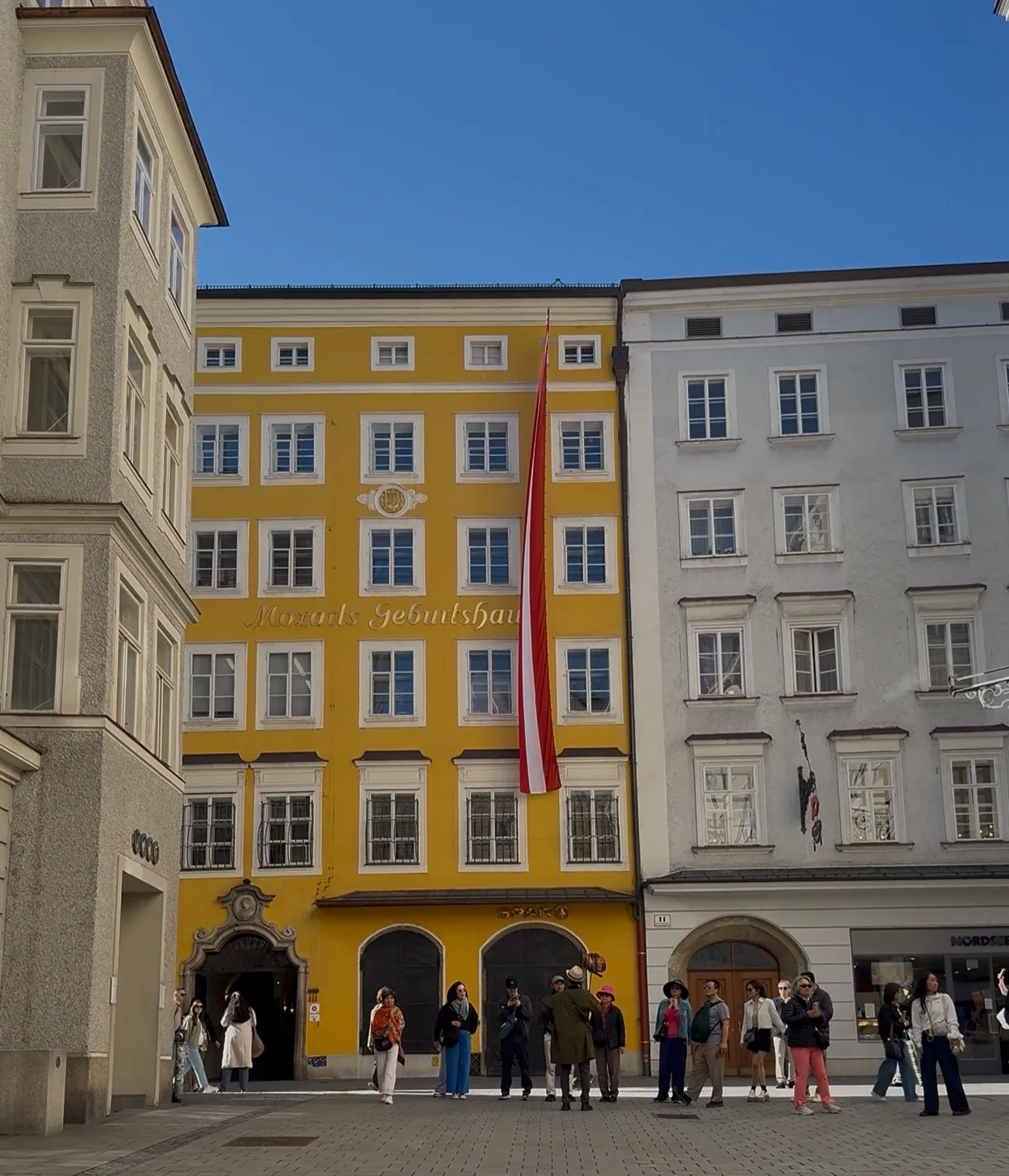
Our first major indoor stop in the old town was Mozart's Geburtshaus, Mozart's birthplace.
The museum is located directly on Getreidegasse, so it is very easy to include in the walking route. At the time of our visit, the ticket was 15 euros per person.
I was not sure how much I would enjoy this museum because I am not deeply interested in classical music. I knew Mozart was important to Salzburg, but I thought the museum might only be meaningful for people who already love music.
It turned out to be more interesting than I expected.
The museum is not only about Mozart's music. It also gives you a look into his family life, childhood, travels, and the world he grew up in. That made it easier to connect with the place, even without being a classical music expert.
After visiting, I understood better why Mozart is not just a famous name in Salzburg. His story is deeply connected with the city's identity.
Keep around an hour for the museum. Since it is right on Getreidegasse, visiting the two together fits perfectly into a walking route without requiring any separate detours.
Residenzplatz and the Sound of Music Connection
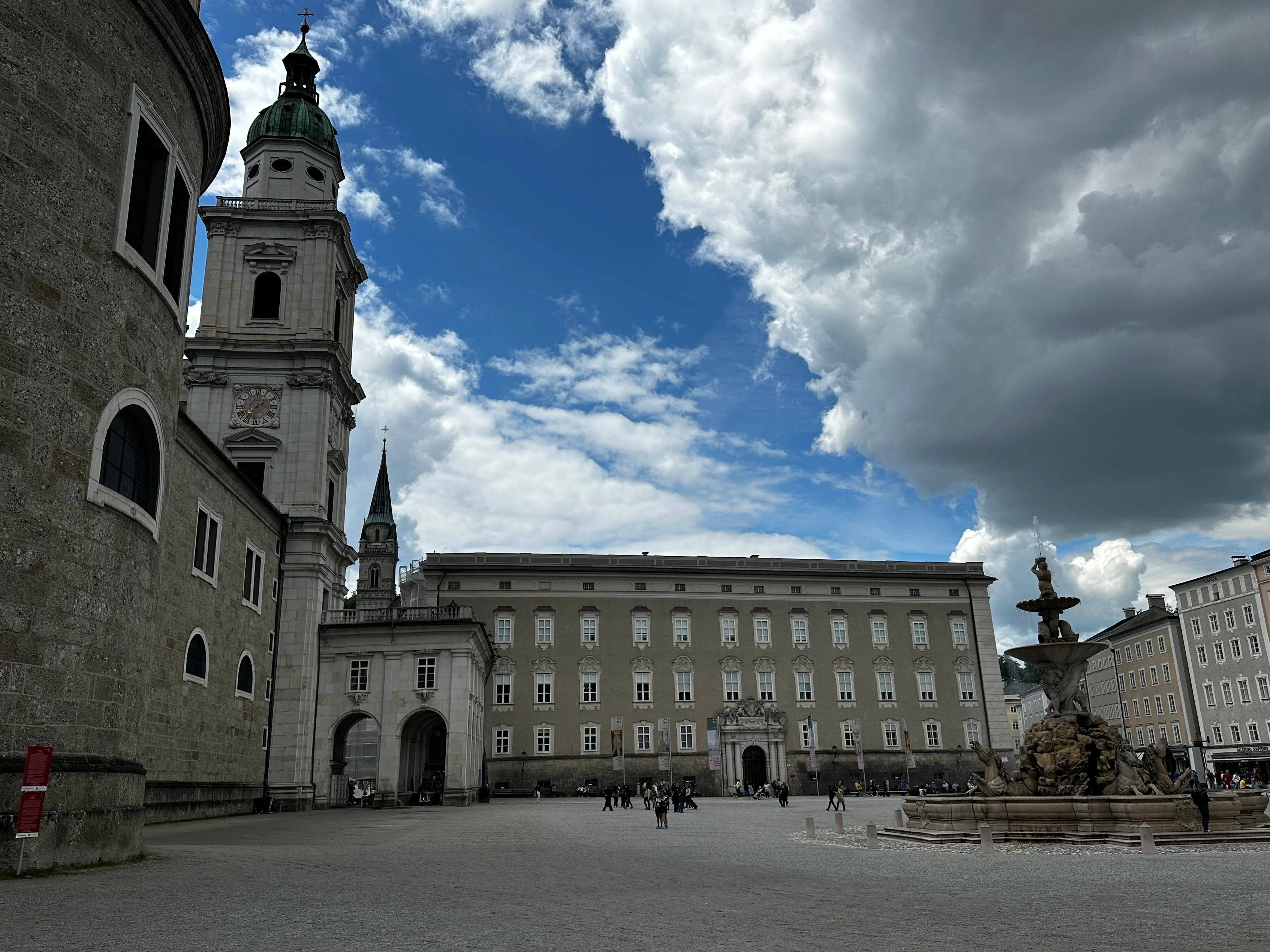
After Mozart's Geburtshaus, we walked towards Residenzplatz.
Residenzplatz is one of Salzburg's grand central squares. It is surrounded by important historic buildings and feels much more open than the narrow lanes around Getreidegasse.
The square is also connected with The Sound of Music. One of the scenes was filmed near the Residenzbrunnen fountain. We were not doing a full Sound of Music route, but it was still nice to notice these connections while walking.
Even without the movie connection, Residenzplatz is worth visiting because it gives you a sense of Salzburg's historic importance. The fountain, the cathedral area, and the surrounding architecture make the square feel grand and formal.
By this time, the city had started becoming much busier. That is the challenge with Salzburg as a day trip. The compact old town makes it easy to explore, but it also means many visitors gather in the same places. Still, Residenzplatz is an important stop because it connects naturally with Salzburg Cathedral and DomQuartier.
You will likely spend 20 to 30 minutes in the square. If you are interested in The Sound of Music, adding Residenzplatz to your walk is a simple way to see a famous filming location without going out of your way.
DomQuartier: One of the Best Indoor Stops in Salzburg
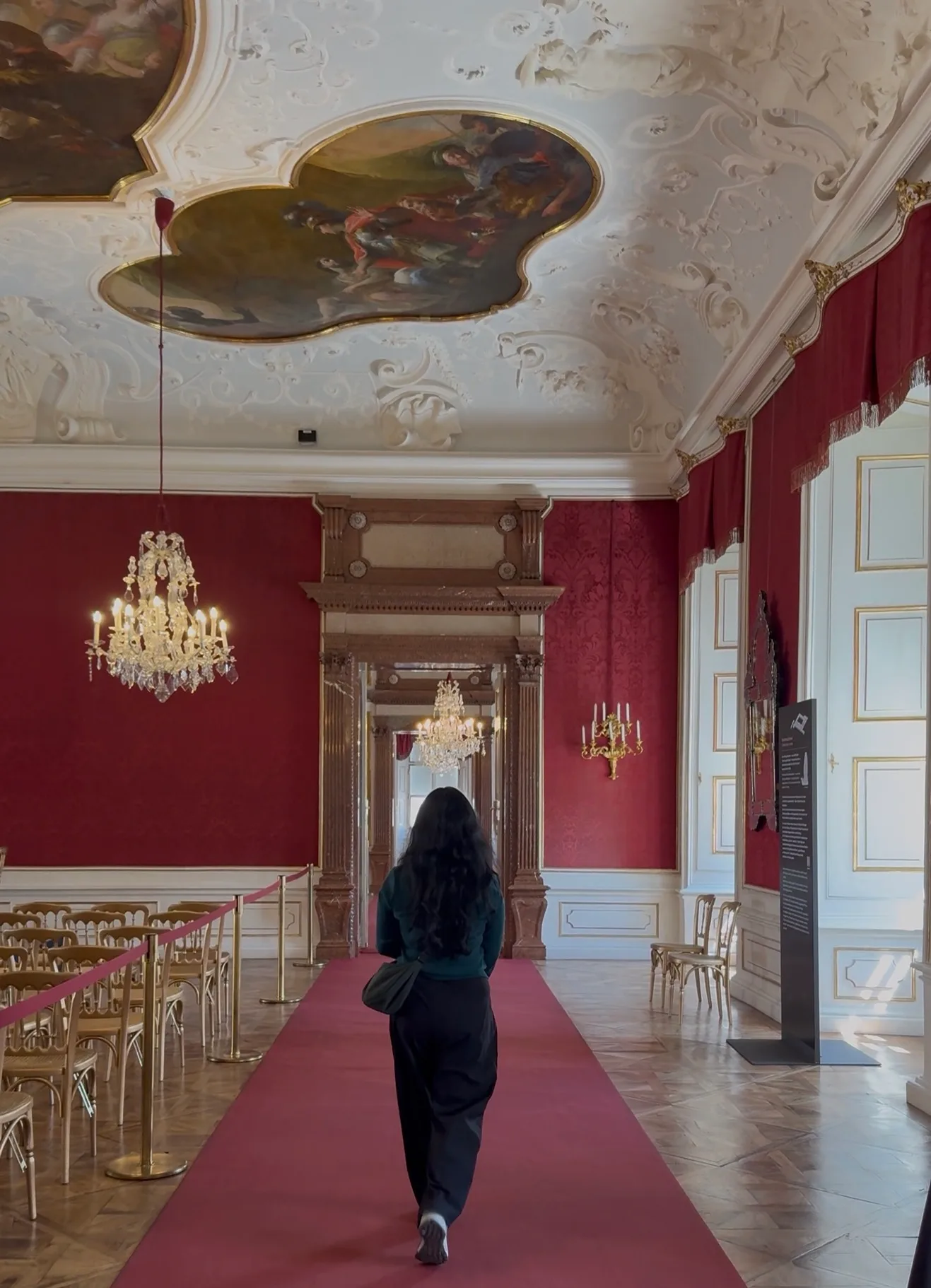
From Residenzplatz, we visited DomQuartier.
This became one of the strongest stops of the day for us. At the time of our visit, the ticket was 15 euros per person.
DomQuartier is not just one museum room. It is a connected route through some of Salzburg's most important historic spaces, including the Residenz Palace, Salzburg Cathedral, and St. Peter's Abbey area. It helps you understand how powerful the Prince-Archbishops of Salzburg once were.
What I liked most was the way the visit moved through different spaces. It did not feel flat or repetitive. You walk through grand rooms, religious spaces, art collections, and viewpoints that connect the city's political and religious history.
By late morning, the streets outside had become crowded, so going indoors also felt like a good decision. DomQuartier gave us a slower and more structured break from the busy old town. My simple note from the day was: DomQuartier is magnificent.
Plan to spend at least an hour, though ideally 90 minutes, exploring the complex. Visiting around late morning or midday is a great strategy—when the old town outside starts feeling too crowded, DomQuartier gives you a quiet, immersive experience without leaving the centre.
Quick Lunch and a Slow Old Town Walk
After DomQuartier, we did not want to spend too much time on a long lunch.
We went back towards the old town area and had a quick lunch at Nordsee. It was simple: fish and a sandwich. It was not a fancy food stop, but it worked well for this type of day.
Sometimes on a packed day trip, the most useful meal is the one that is quick, filling, and does not break the flow of the route.
After lunch, we walked around the old town without trying to chase every attraction. This was a good decision. Salzburg is not only about ticketed sights. The streets, courtyards, shop signs, squares, and river views are also part of the experience.
This is also why I would not suggest filling every hour with museums. A day trip needs some space. Otherwise, Salzburg can start feeling like a checklist instead of a city you are actually experiencing.
Keep around an hour for lunch and slow wandering. Salzburg's old town is compact, so leaving some unscheduled walking time between major stops allows you to actually experience the city rather than just rushing to the next ticket counter.
Kapitelplatz: The Square Below the Fortress
Later, we made our way to Kapitelplatz.
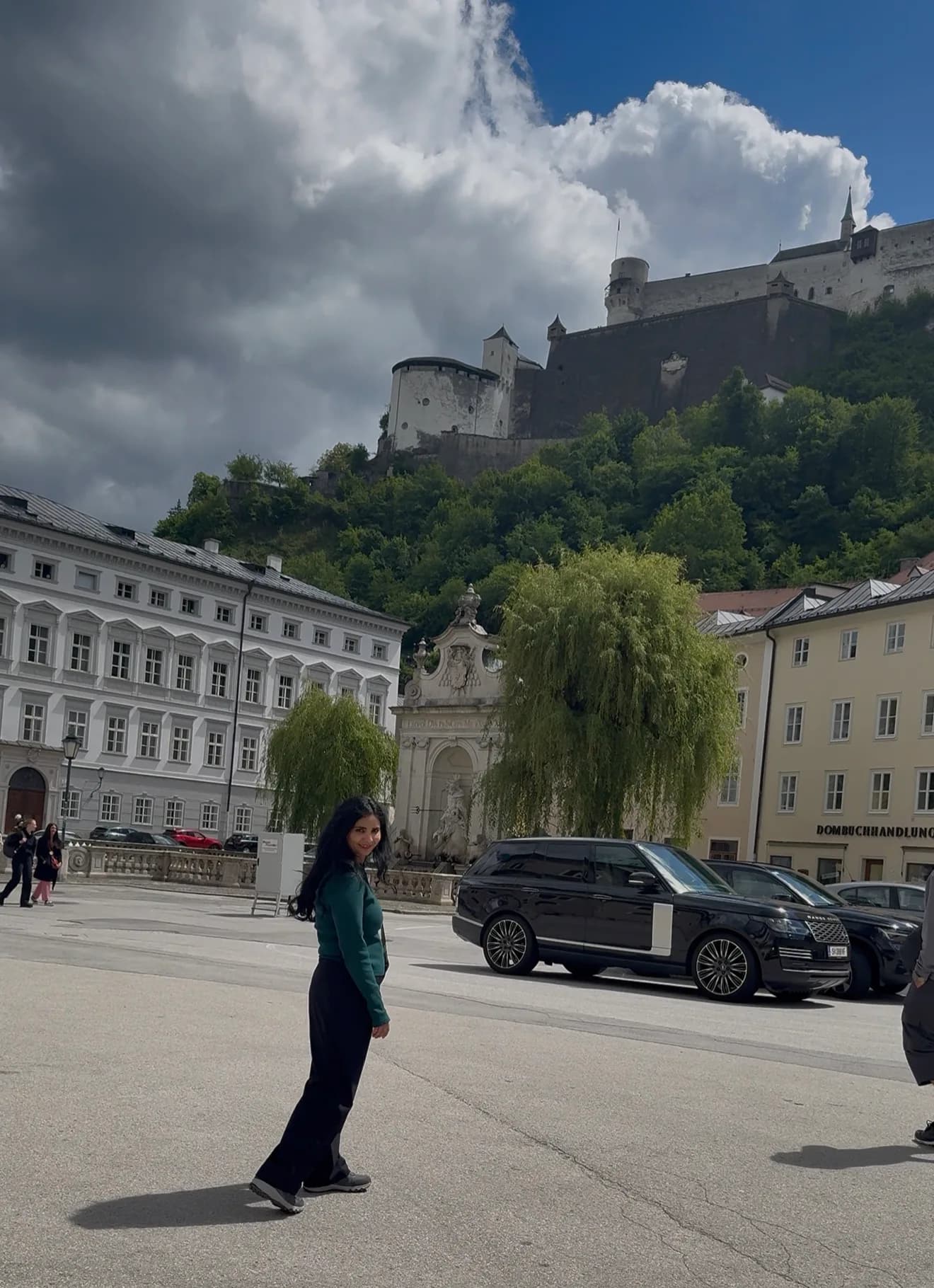
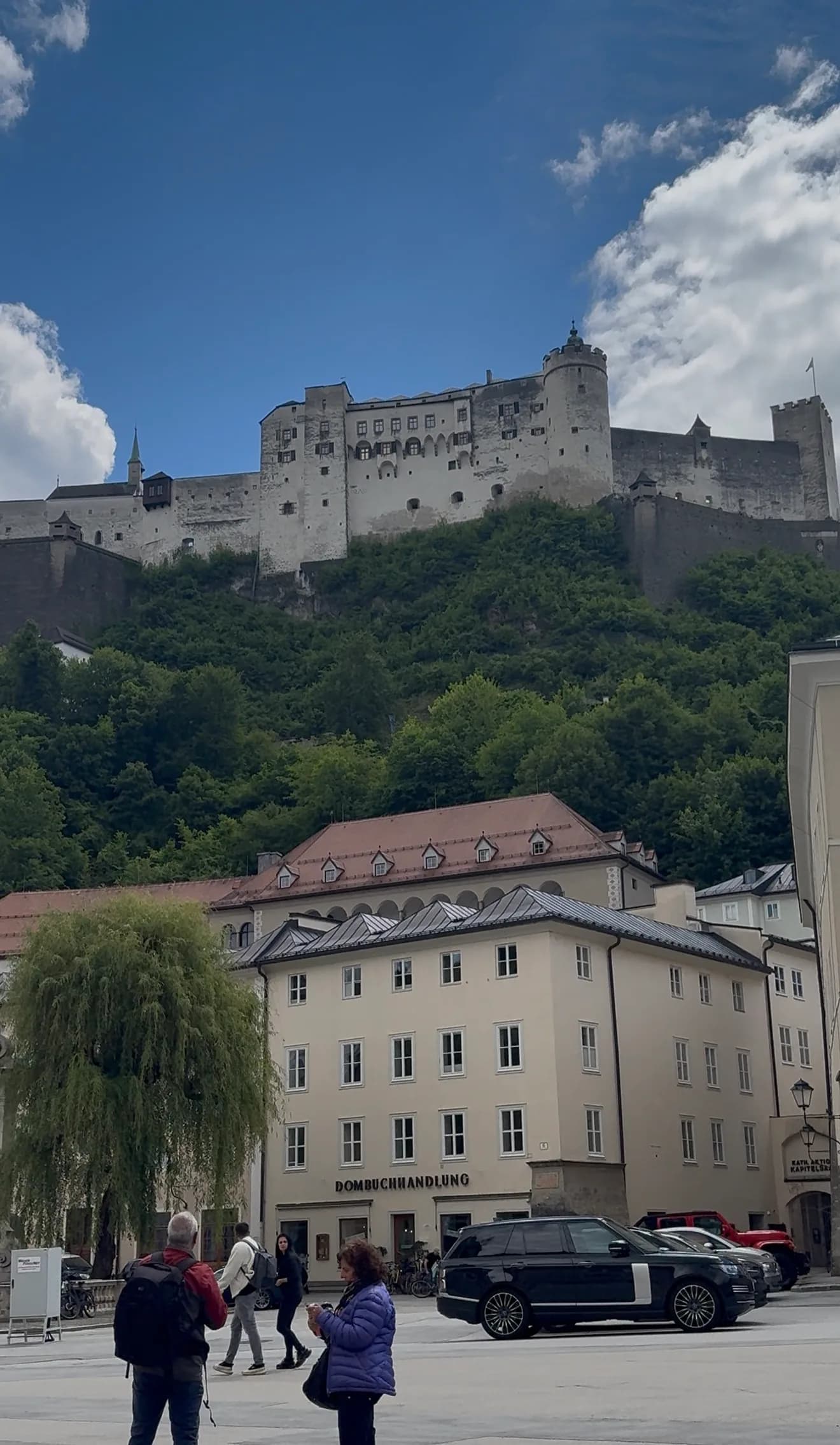
Kapitelplatz is a large square beneath Hohensalzburg Fortress. It feels more open than the narrow old town streets and works well as a pause before going up to the fortress.
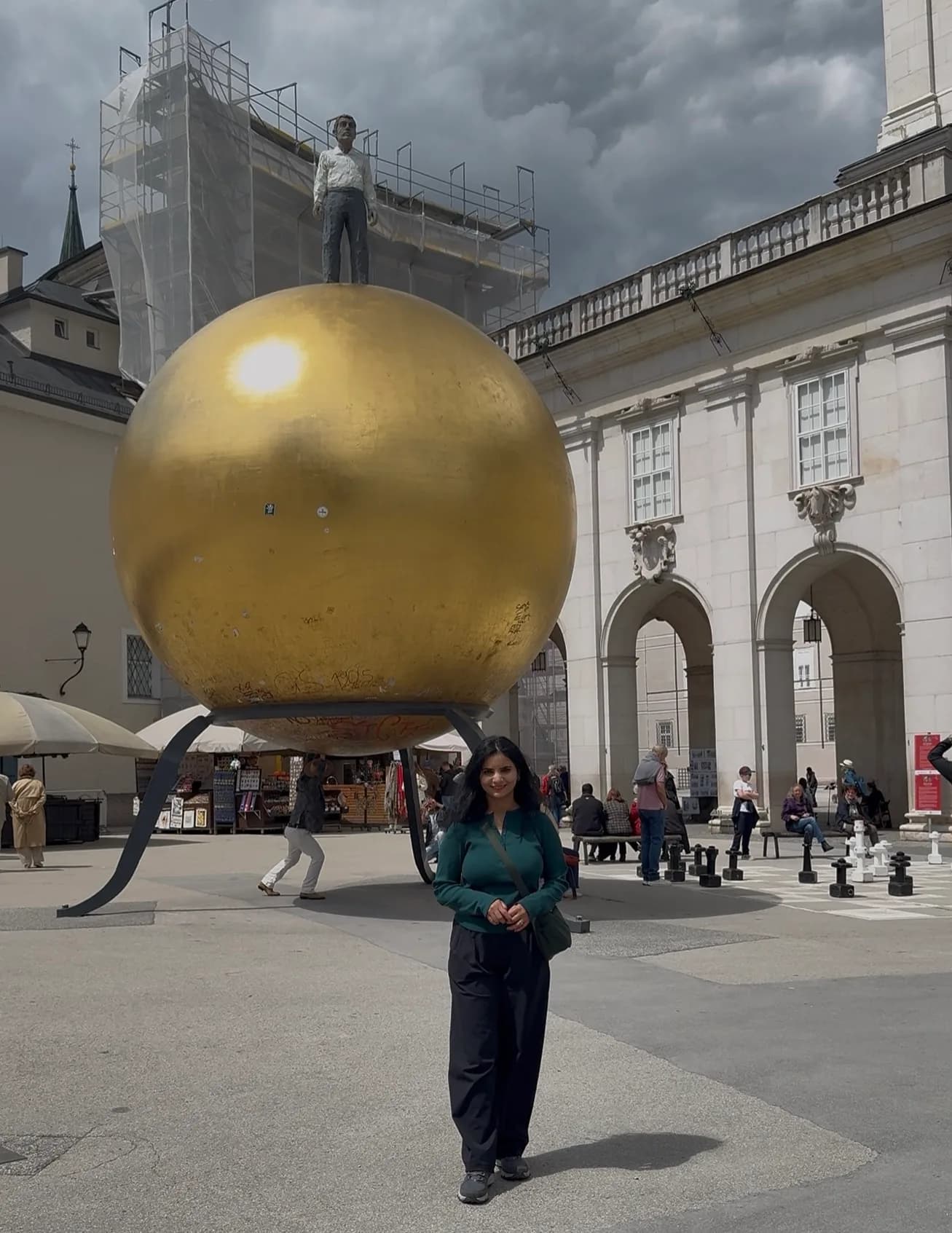
There are several things to notice here: the Sphaera sculpture, Neptune Fountain, the giant chessboard, market stands, and the view towards the fortress.
The first thing that caught our attention was the Sphaera sculpture. It is a large golden sphere with a man standing on top of it. The sculpture was created by German artist Stephan Balkenhol in 2007, and it stands out strongly against Salzburg's historic surroundings.
I liked the contrast. After walking through churches, old streets, palace spaces, and historic squares, suddenly there was this modern artwork in the middle of everything.
The man on top does not look like a king, saint, or famous historical figure. He looks ordinary, standing calmly on a huge golden sphere. That made the sculpture feel open to interpretation. In a city so closely connected with Mozart, churches, palaces, and the fortress, this modern piece adds something unexpected.
Kapitelplatz also gives you a clear view of where you are going next. You can look up at Hohensalzburg Fortress and decide whether to walk uphill or take the funicular.
For us, it was a natural transition point. We had explored the old town, visited DomQuartier, walked through busy streets, and now we were ready for the big viewpoint of the day.
You only need about 20 to 30 minutes here. Make sure to stand back and look up towards the fortress from the square; it helps you understand how strongly the castle shapes the geography of Salzburg's old town.
Hohensalzburg Fortress: The Best View of the Day
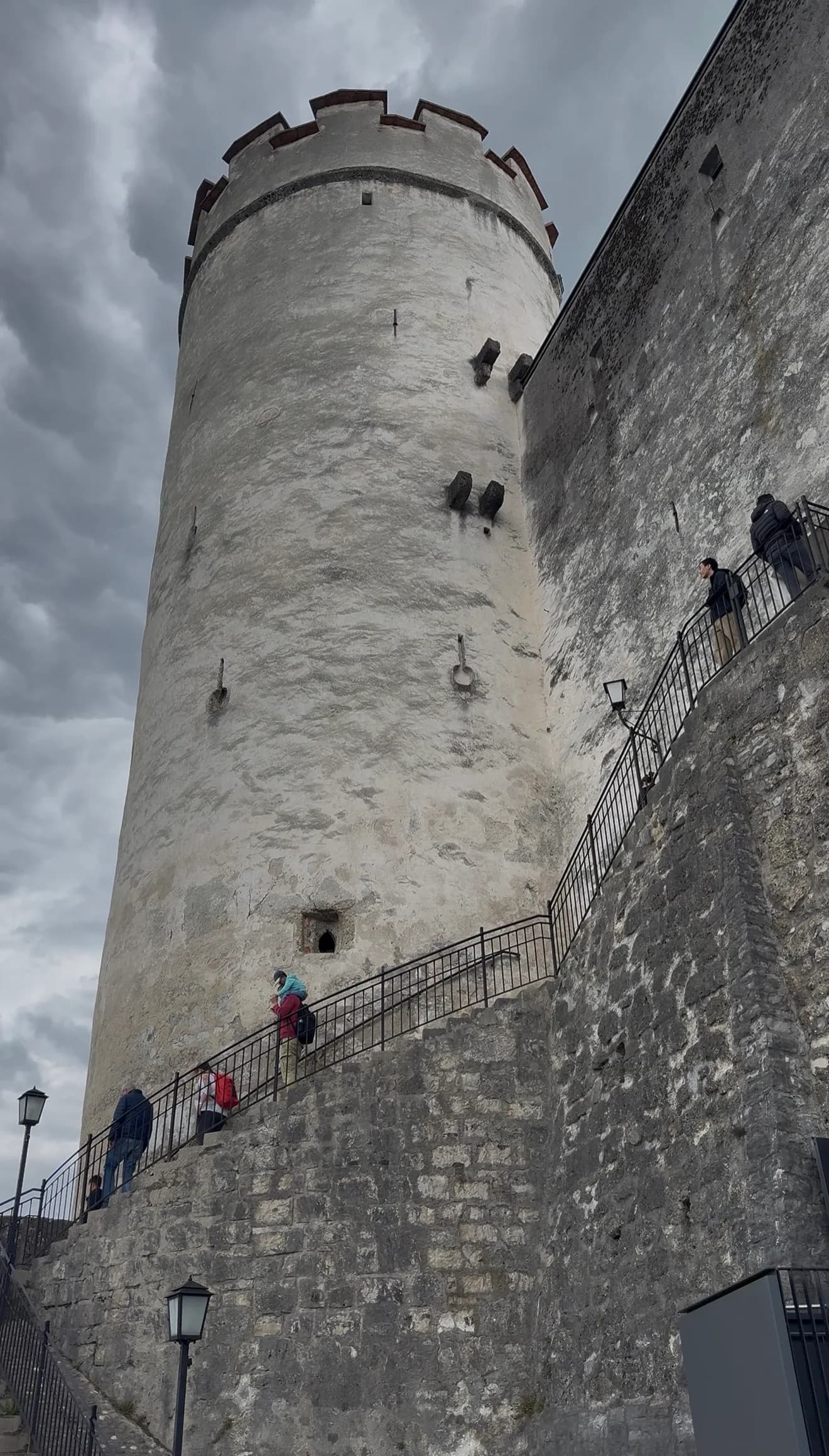
From Kapitelplatz, we went up to Hohensalzburg Fortress.
Hohensalzburg is one of Salzburg's most important landmarks. It sits above the old town and gives some of the best views of the city and surrounding mountains.
We chose to take the FestungsBahn funicular instead of walking uphill. After already walking for several hours on cobblestones, this felt like the right choice. The ride was very short, but it saved energy for exploring the fortress itself.
You can walk uphill if you want a more scenic approach, but for a day trip, the funicular makes the visit easier.
We spent around two hours at the fortress, and that felt like the right amount of time. There are walls, courtyards, museum areas, viewpoints, and plenty of corners to explore. The views are the main reason I would not skip this stop.
From one side, you see Salzburg's old town with its domes, towers, and river. From another side, the landscape opens towards the mountains. After spending most of the day inside the old town, seeing Salzburg from above made the whole route feel complete.
Before heading back down, we stopped at the restaurant inside the fortress and tried Salzburger Nockerl, a famous Salzburg dessert. It was soft, warm, and cloud-like, with powdered sugar on top and berry sauce underneath. It became one of those small food memories that stay with a trip.
Budget around two hours for the fortress, or longer if you plan to eat there. If you want to save energy, definitely take the funicular (your funicular ticket includes the fortress entrance fee). Only walk uphill if you have plenty of time and stamina.
A Few More Stops Before Returning to Munich
After coming down from Hohensalzburg, we returned to the old town.
By this point, we were no longer following a strict route. We had already seen the main places we wanted to visit, so the last part of the day became more relaxed.
We walked through a few courtyards, passed the area around St. Peter's Abbey, visited Mozartplatz, saw the area around Mozart's Residence, and also stopped by Gurken.
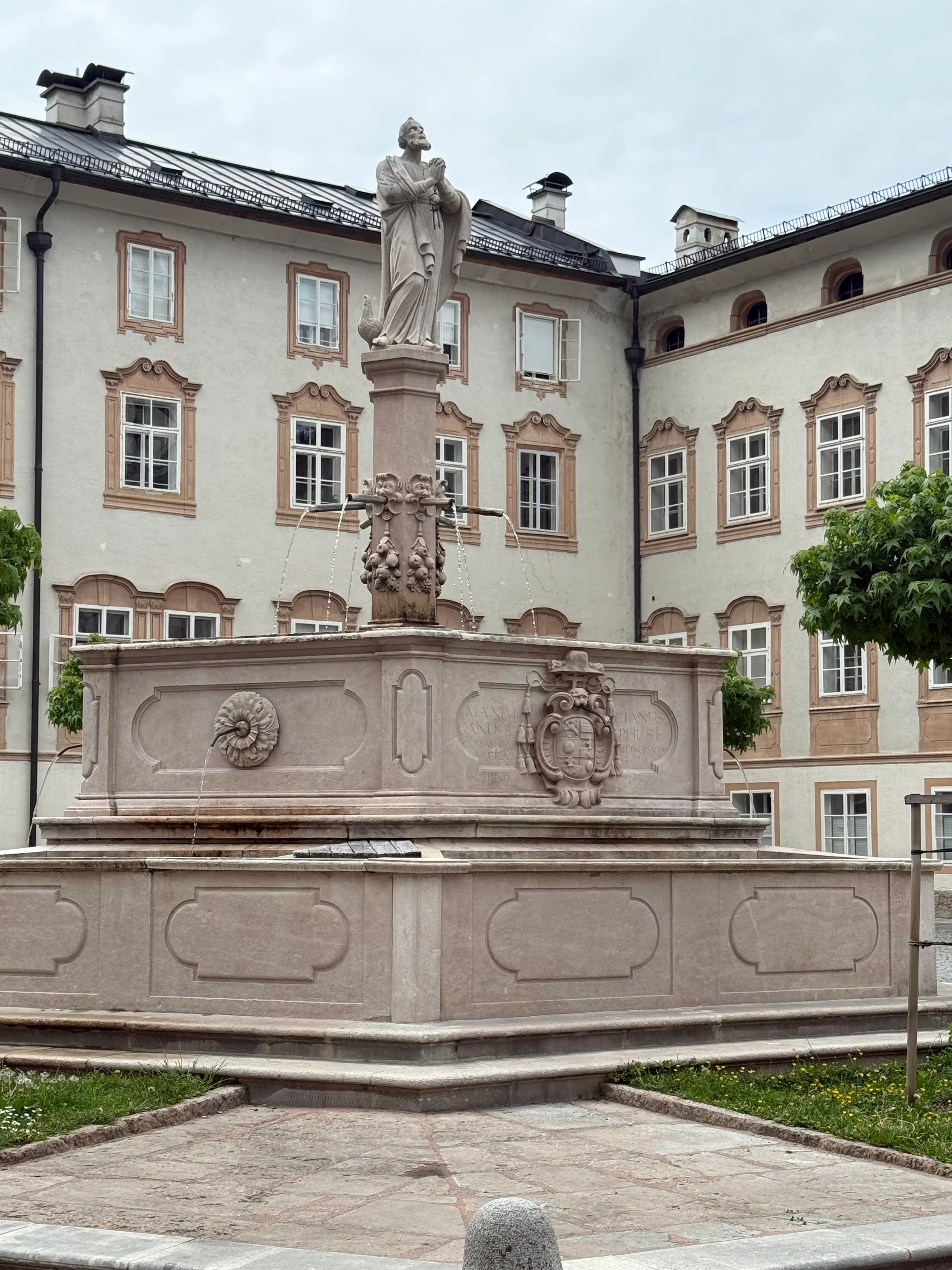
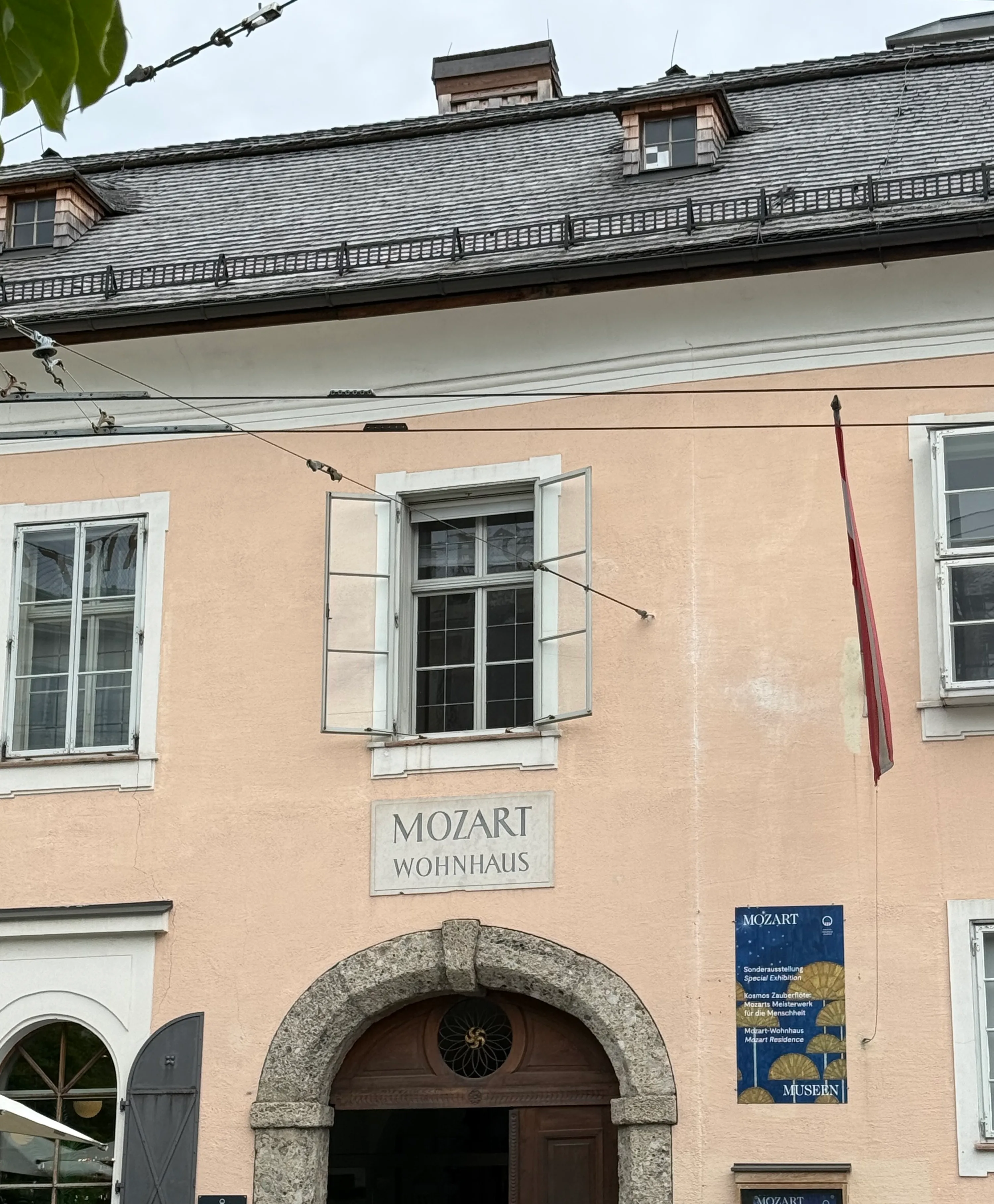
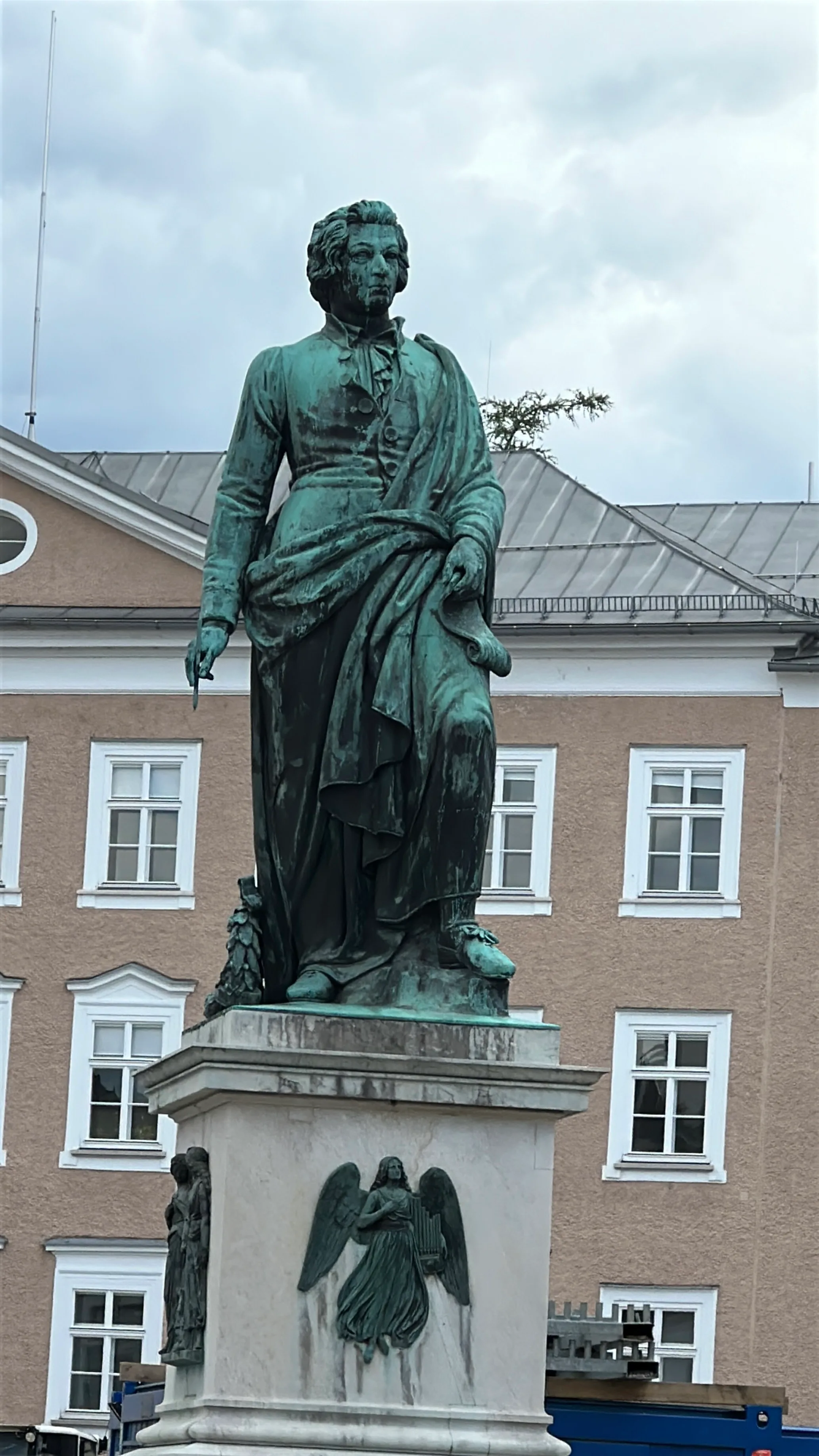
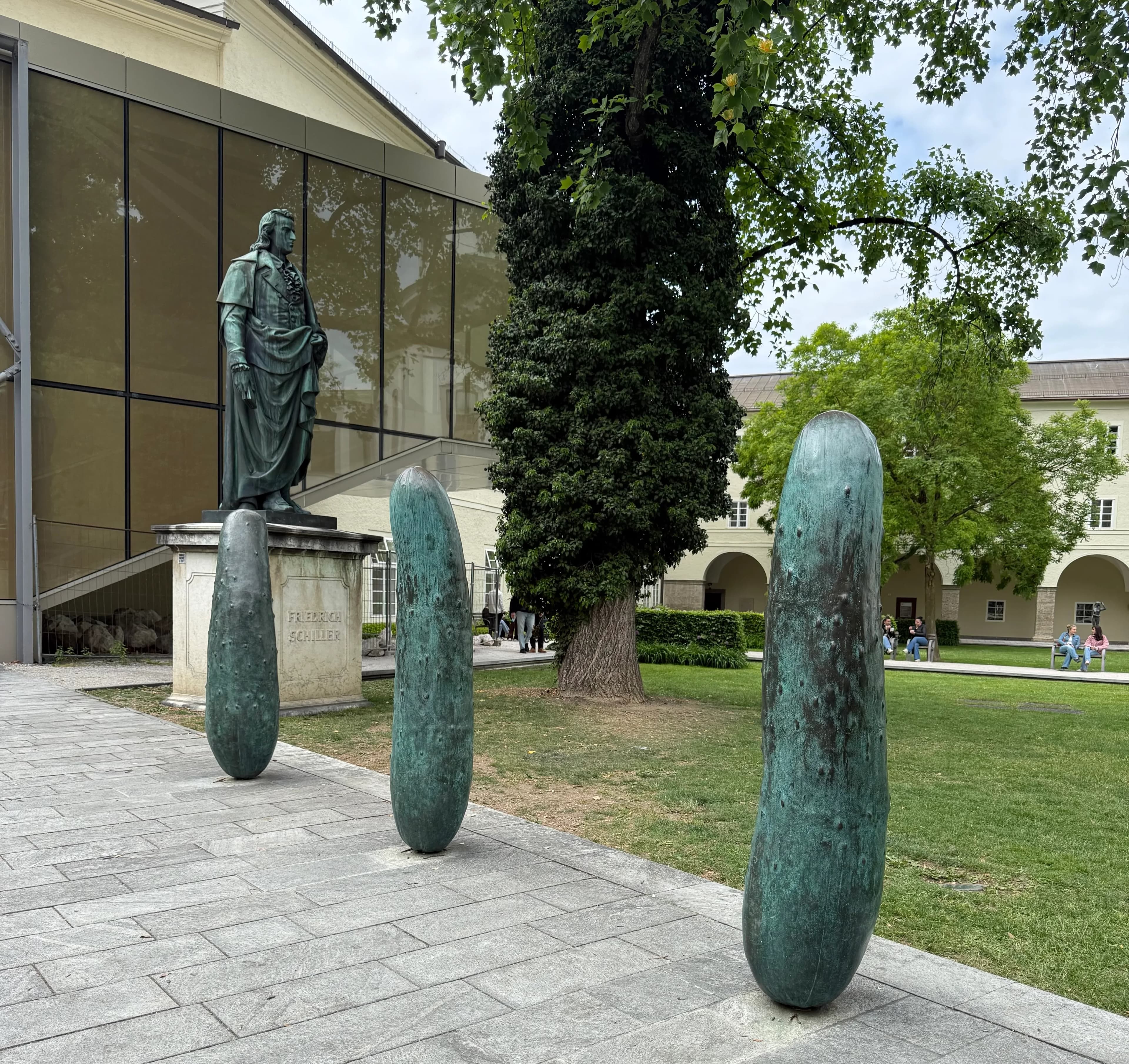
This slower ending was good because Salzburg had already given us a full day: Mirabell Gardens, café culture, Mozart's story, Getreidegasse, Residenzplatz, DomQuartier, Kapitelplatz, Hohensalzburg Fortress, Salzburger Nockerl, and river views.
Trying to add too much more would have made the day feel rushed.
Returning from Salzburg to Munich
By late afternoon, we started making our way back towards the train station.
The return train to Munich was crowded, which was not surprising. Many people do Salzburg as a day trip, so the evening regional trains can fill up quickly.
If you are returning to Munich the same day, try to reach the platform a little early so you have a better chance of getting a seat.
There was also border police control on our return journey. It was not a problem, but it is useful to know that this can happen on cross-border routes. Keep your passport or ID easy to access.
By the time we reached Munich, we were tired, but in a good way. Salzburg is very doable as a day trip, but it is not a lazy day. You need an early start, comfortable shoes, and a plan that does not overload every hour.
What Worked Well for Our Salzburg Day Trip
The early train was the best decision.
Reaching Salzburg around 8 am gave us a calm start at Mirabell Gardens and Café Sacher before the main crowds arrived. It also gave us enough time to visit the old town, museums, squares, and fortress without constantly watching the clock.
The route also worked well. Starting from Mirabell Gardens, crossing Marko-Feingold-Steg, entering the old town, visiting Mozart's Geburtshaus, moving towards Residenzplatz and DomQuartier, then continuing to Kapitelplatz and Hohensalzburg created a natural walking flow.
I also liked that we mixed different types of experiences. The day had gardens, cafés, museums, old streets, squares, public art, fortress views, and one local dessert. If the whole day had been only museums, it would have felt heavy. If it had been only walking, we would have missed some of Salzburg's deeper history.
That balance made the day feel full without becoming boring.
What I Would Do Differently
I would explore Getreidegasse earlier.
We saw it in the morning, but we did not spend enough time there before moving ahead. When we came back later, it was much more crowded. Next time, I would slow down there before 10 am, look at the shop signs properly, and explore the small passages before the tour groups arrive.
I would also check the Hohensalzburg Fortress ticket details in advance, especially the funicular and entry combination, so there is no confusion at the ticket counter.
If we had more time, I would add a slower walk along the Salzach River. We crossed the river and saw it from different points, but I think the riverside deserves more time than we gave it.
Practical Tips for a Salzburg Day Trip from Munich
Start early. This made the biggest difference for us. Salzburg gets crowded, especially around Getreidegasse and the main old town squares.
Use the regional train if you are travelling with the Deutschlandticket. Check the “local transport only” option in the Deutsche Bahn app so you do not accidentally board a train where the ticket is not valid.
Begin at Mirabell Gardens. It is a calm first stop and gives you a beautiful view towards the fortress.
Add Café Sacher in the morning if you want to try Sacher Torte. It was much quieter early in the day.
Do not rush Getreidegasse. It is more than a shopping street. Look up at the signs and explore the small passages.
Choose your paid attractions carefully. For us, Mozart's Geburtshaus, DomQuartier, and Hohensalzburg Fortress were worth it. But doing too many paid stops can make the day feel packed.
Keep time for Hohensalzburg Fortress. It needs around two hours and gives some of the best views of Salzburg.
Wear comfortable shoes. The city is compact, but the day involves a lot of walking and cobblestones.
Expect a crowded return train. Try to reach the platform early if you want a seat.
Carry your passport or ID. There may be border police checks on the train between Austria and Germany.
Final Thoughts
Salzburg worked beautifully as a day trip from Munich because it was easy to reach, easy to walk around, and full of variety in a small area.
What I liked most was that the day did not feel like only sightseeing. It started gently at Mirabell Gardens, slowed down with coffee and Sacher Torte, became more meaningful at Mozart's Geburtshaus and DomQuartier, opened up at Kapitelplatz, and ended with wide views from Hohensalzburg Fortress.
It was crowded, yes. It was also a long day. But with an early start and a focused route, Salzburg is very doable from Munich.
For us, it added a different chapter to our Munich trip. We left Germany in the morning, spent the day walking through Austria's music, history, cafés, old streets, and fortress views, and returned to Munich tired but happy.
For more on using Munich as a base, see our full five-day Munich itinerary. More Germany guides are on our destinations page.